Figure 1: Climate software market segmentation
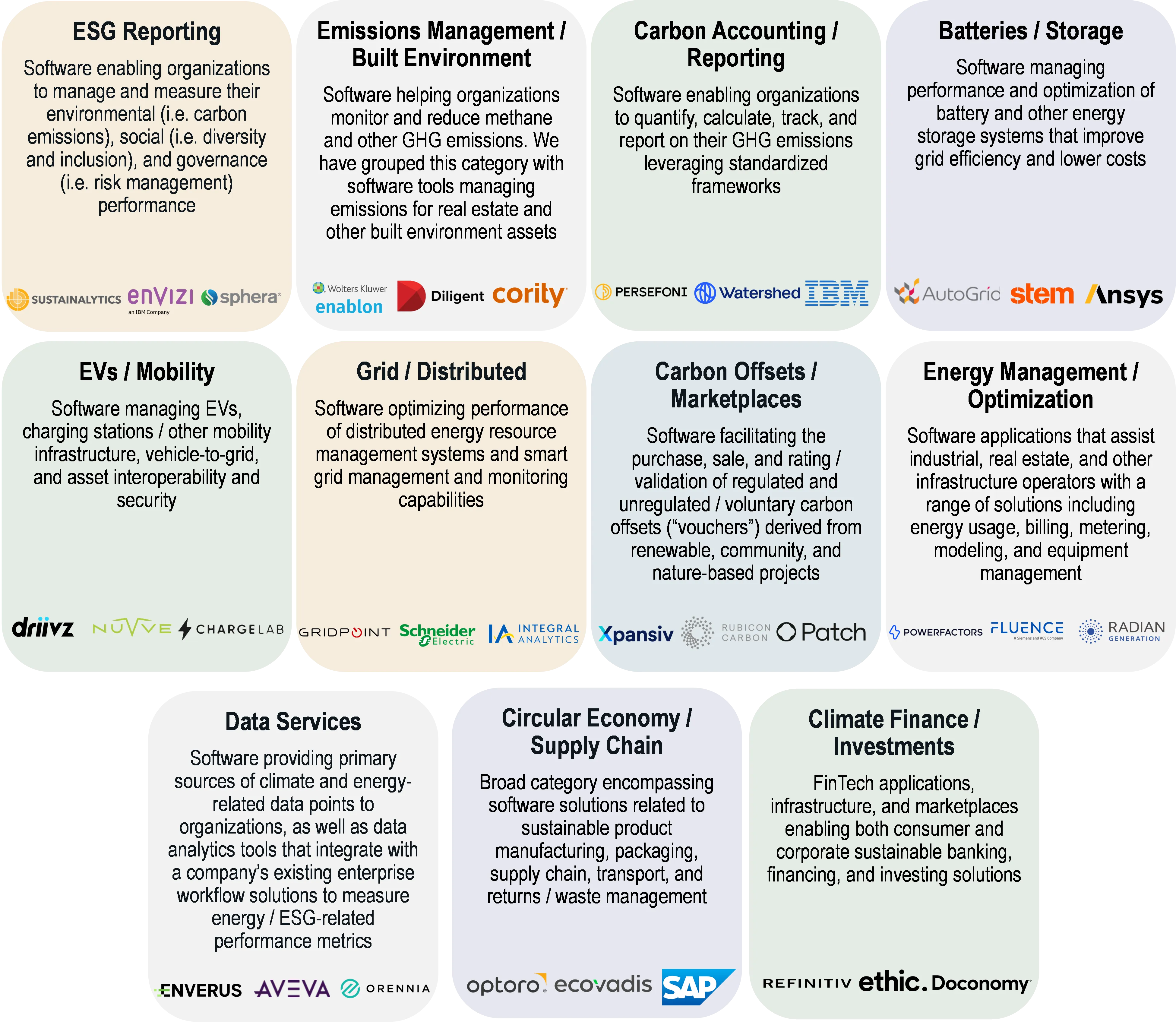
Source: Lazard VGB Insights
1. Robust market tailwinds and capital stack:
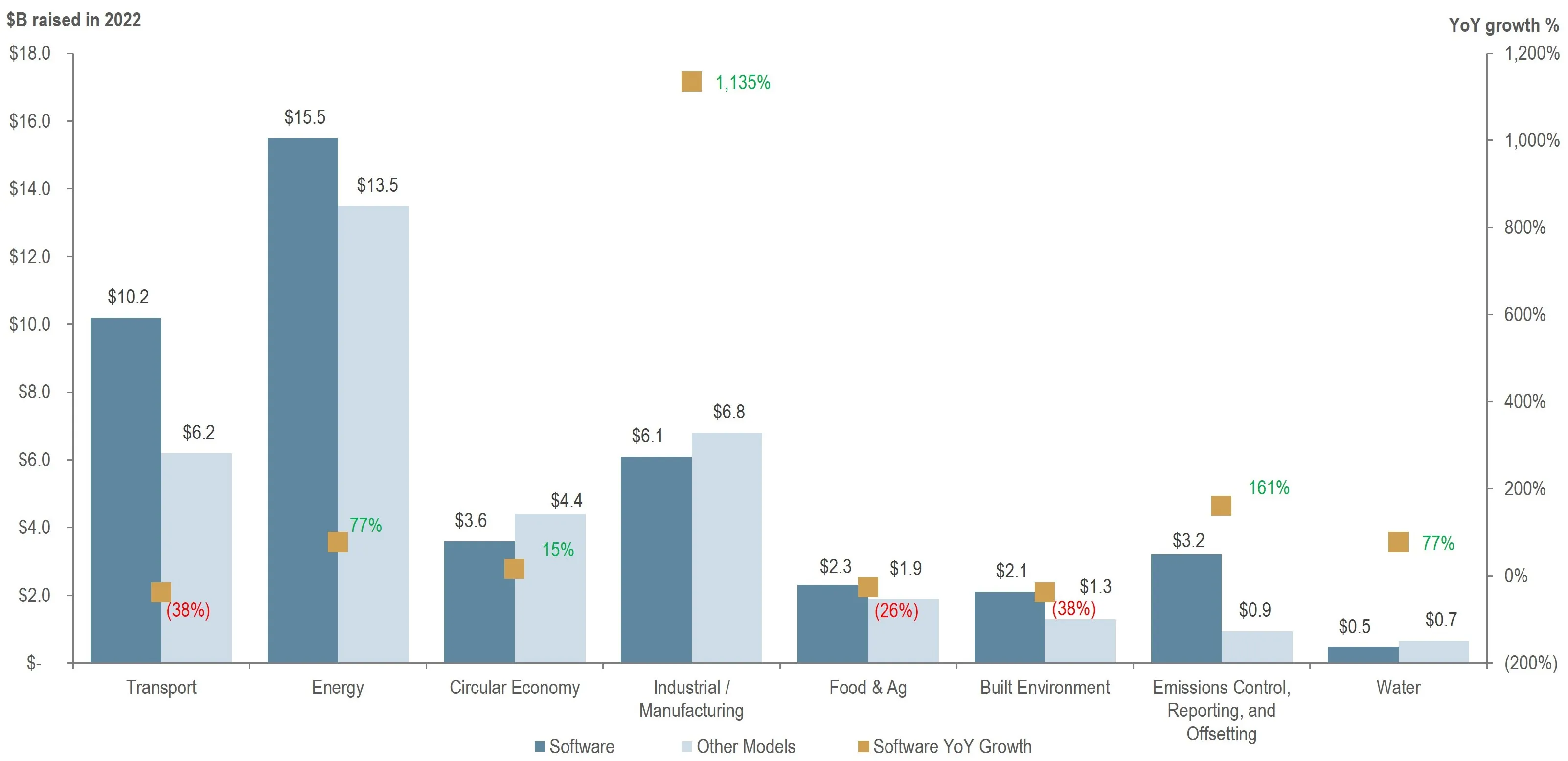
Even with the proliferation of billion-dollar sustainability and impact-focused funds flooding the market ($23B+ of new climate tech capital raised YTD 2023), we believe climate tech’s fundamental drivers – including mounting global decarbonization pressures and corporate net zero commitments, government budgetary and regulatory tailwinds, cost savings from renewables and electrification, and robust early-stage company formation – will continue to increase generalist growth investors’ appetites for investing in the clean energy transition over the next several years. In 2022, climate software private investments grew ~3x the rate of other climate tech business models as new investors continued to enter the market (Figure 2), and early-stage company formation has skewed heavily towards software models in recent years to the point where there is now relative balance at the venture and growth-stages across all climate tech business models (Figures 3 and 4).
Figure 2: Climate tech new private market investor growth
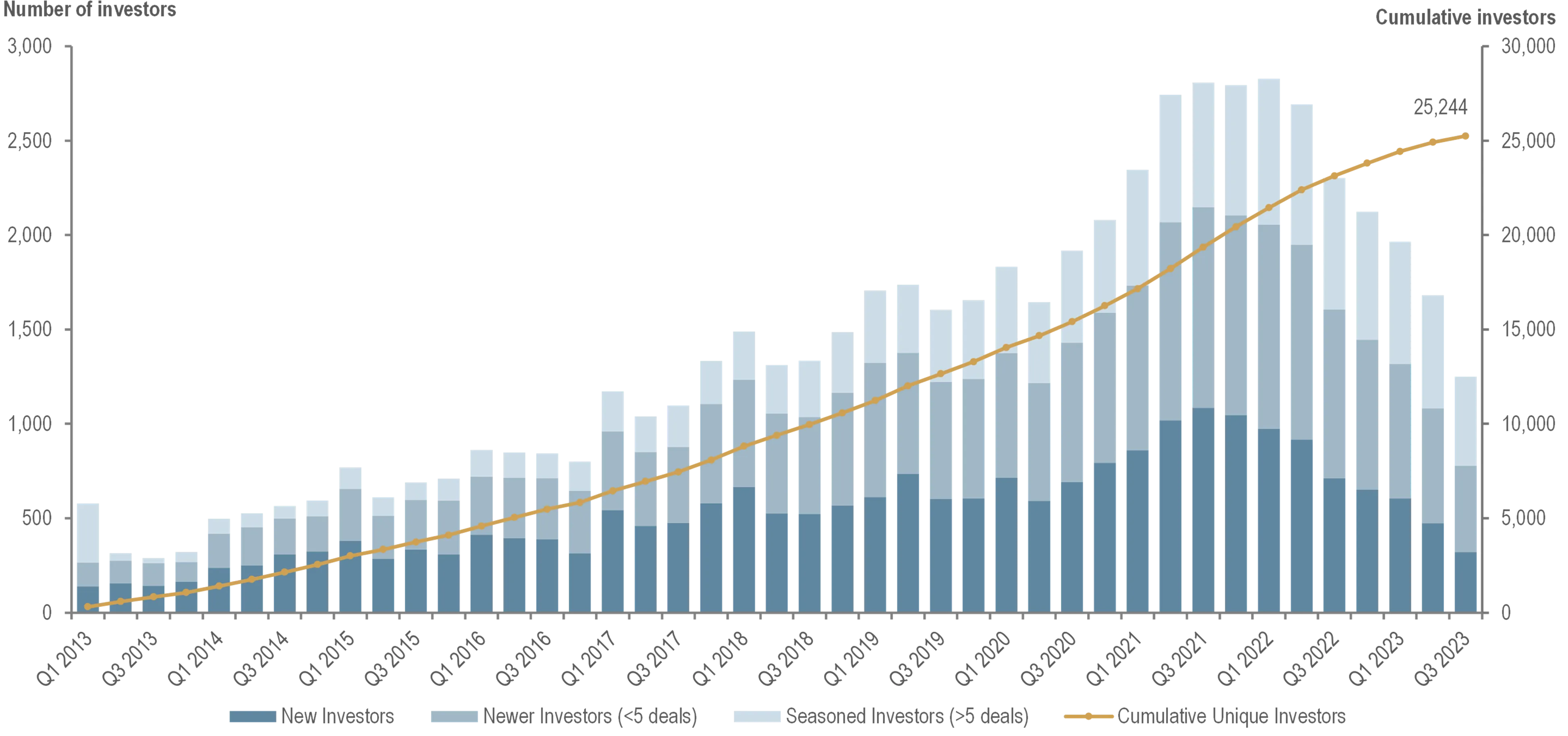
Source: PWC
Figure 3: Multiple change in the number of climate tech companies incubated by business type
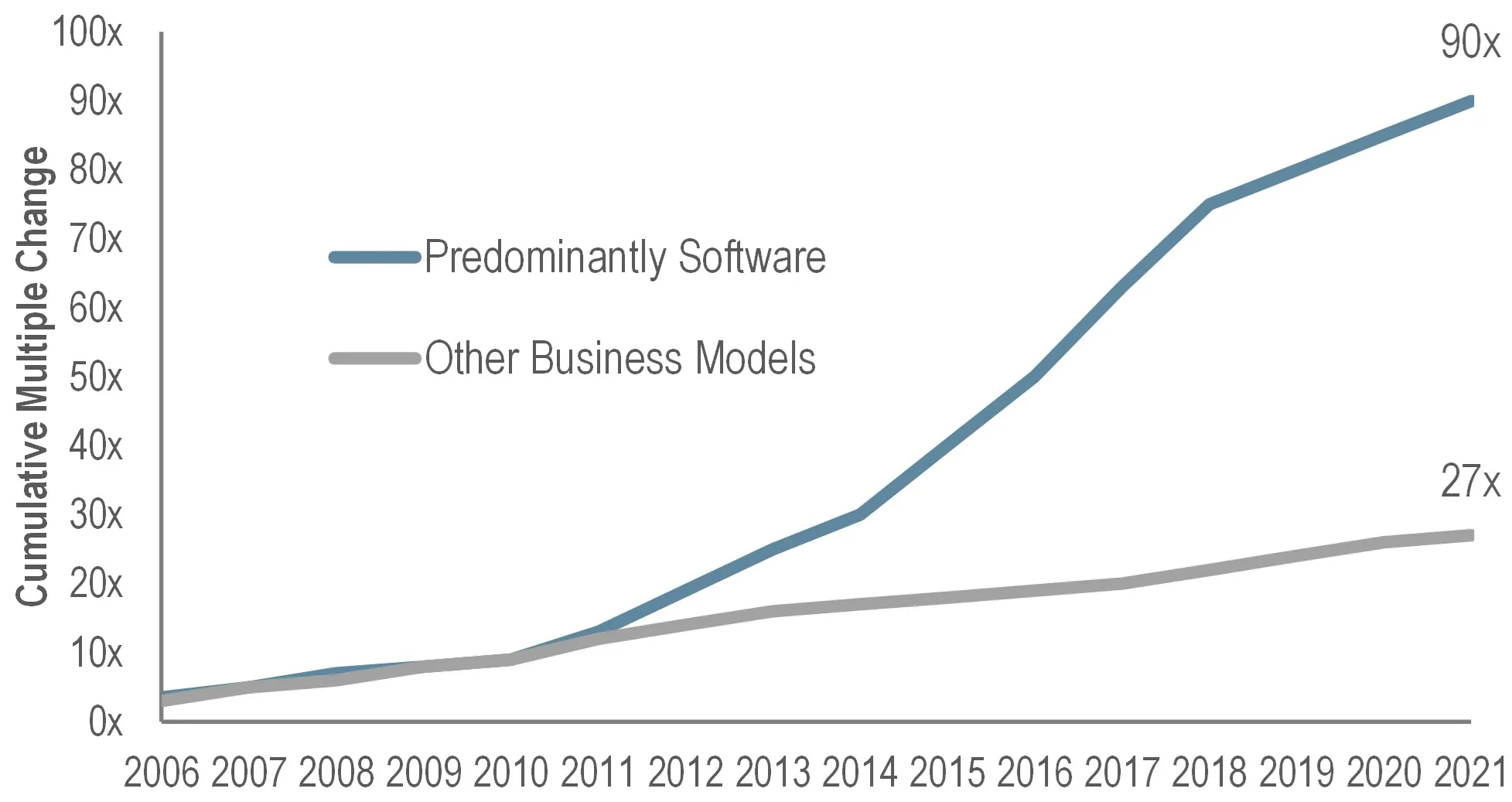
Source: Endeavor Insight
Figure 4: Climate tech VC-backed start-ups by type (as of Aug. 2023)
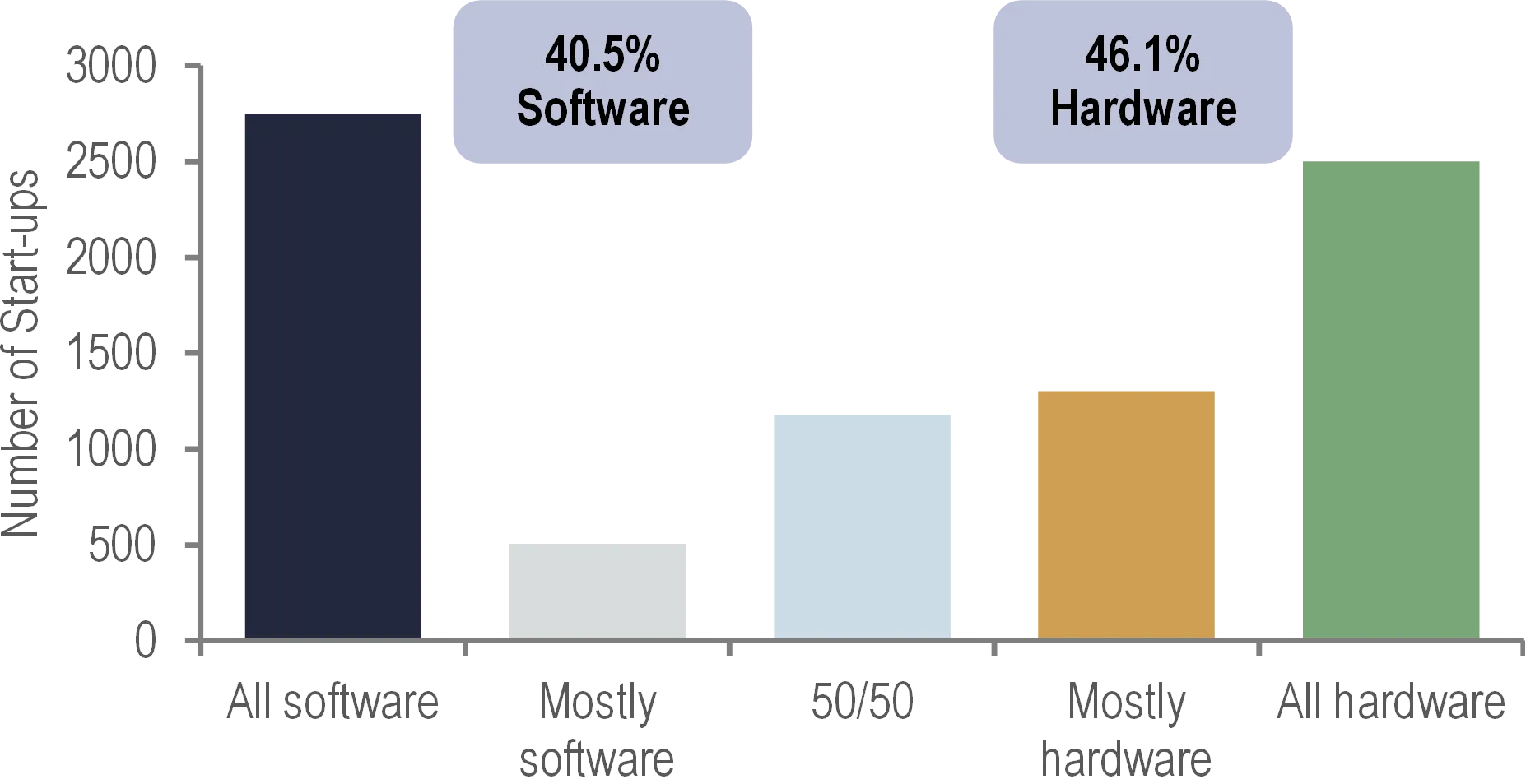
Source: Powerhouse Fund
2. Clear opportunities at the scale-up phase:
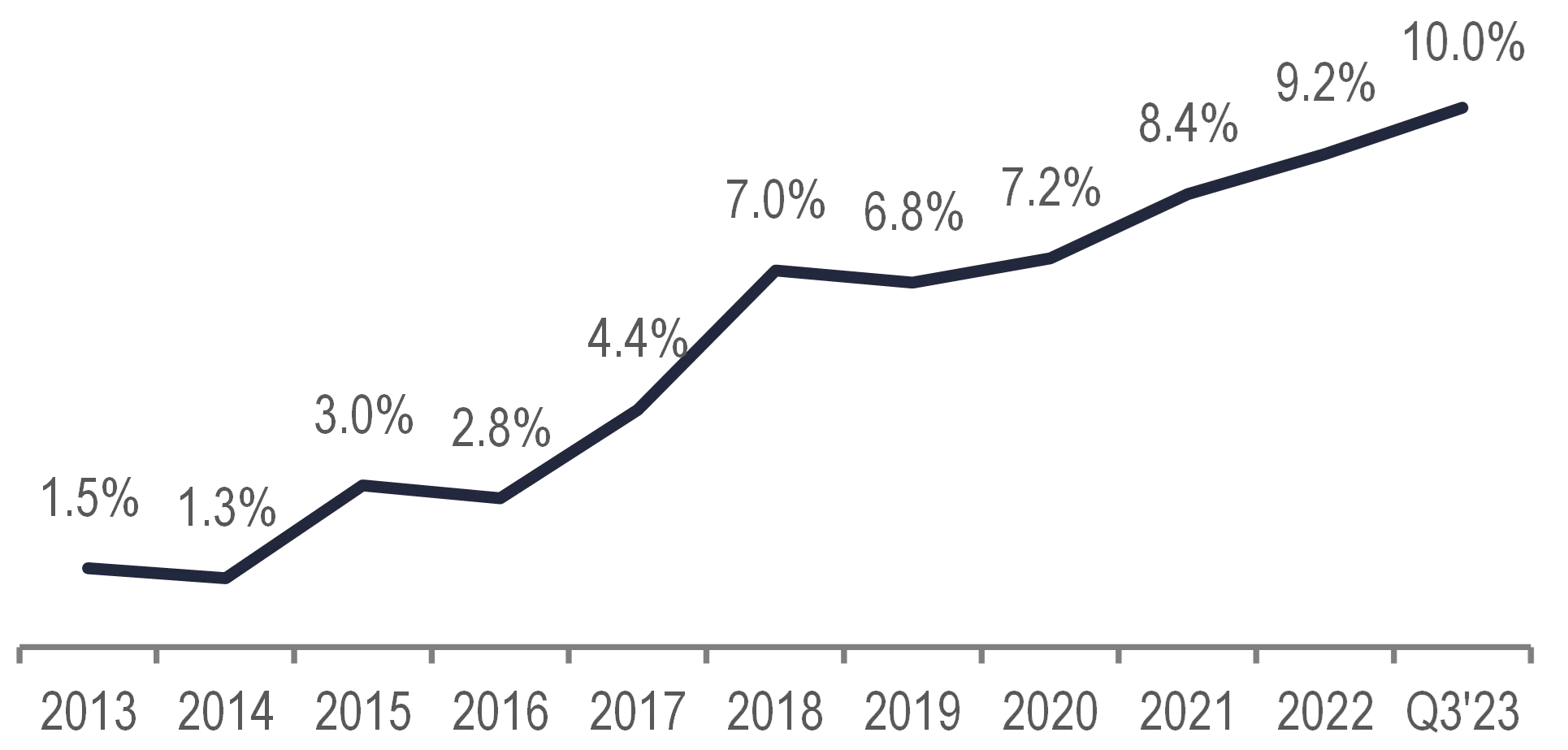
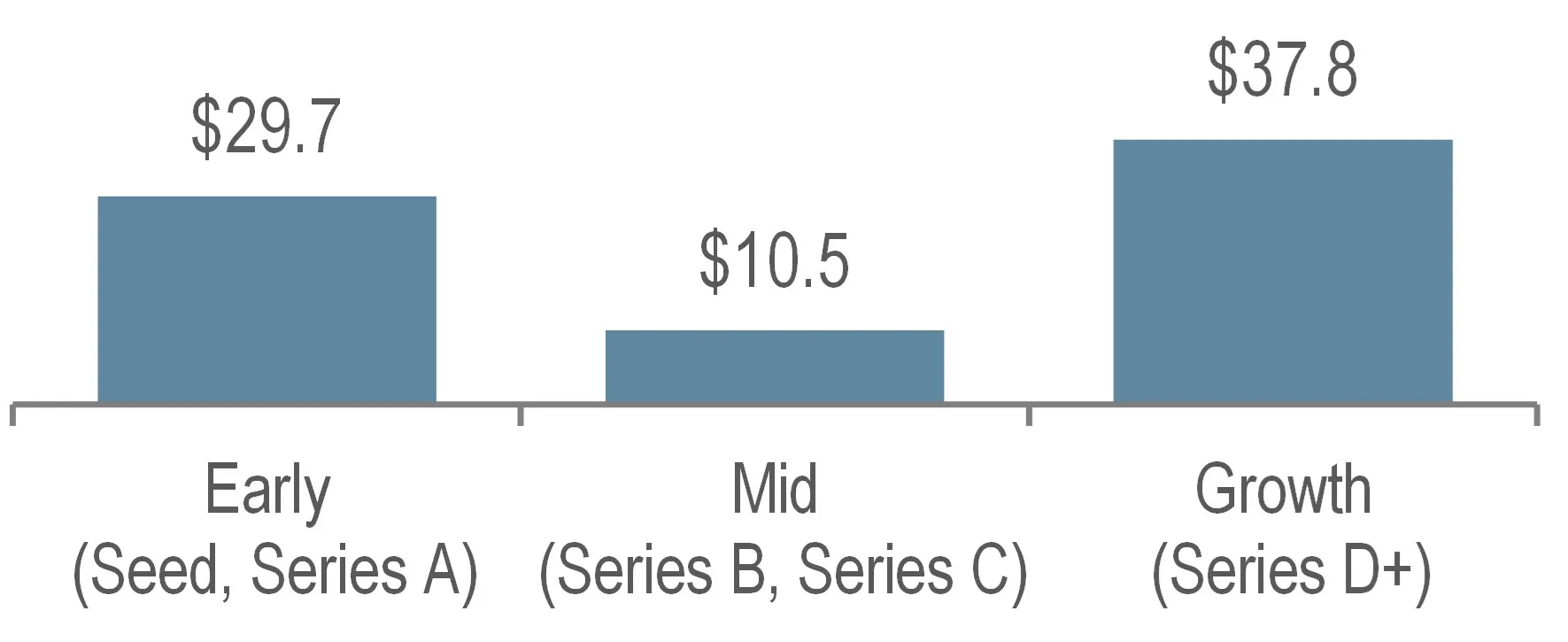
Despite total private market funding decreasing 50% YoY through Q3 ‘23, climate tech continues to proportionally increase its share of the total venture and growth investment pie (see Figure 5). In an industry where software and hardware must co-exist and innovation has historically been characterized by capital intensity, long lead times, and delayed returns, this new wave of climate software companies with fast-growing enterprise and consumer end-markets is creating on-ramps for growth-oriented investors to enter the industry, particularly at the early-growth stages (Series B and C), where there has historically been far fewer participants (see Figure 6).
Figure 5: Climate tech private market investments as a % of total start-up investments
Source: PWC
Figure 6: Estimated total private climate tech-focused funds raised by focus stage in 2021 and 2022 ($B)
Source: Union Square Ventures
3. It’s all about data:
We believe software’s role as an innovation catalyst in climate tech will continue to expand as widespread enterprise demand for automation tools that optimize the collection, analysis, and reporting of the reams of data being generated by historic investments into clean energy infrastructure (IEA projects $1.7T in 2023 following six years of increases). Currently, the highest-growth areas within the software category include industrial / manufacturing data and automation platforms (often paired with hardware and sensors), emissions control and offsetting tools, and energy management solutions covering the production, conversion, distribution, and consumption of energy for both consumers and enterprises.
Figure 7: North America and Europe climate tech investment trends by type in 2022 ($B)
Sources: Net Zero Insights, PWC
4. Attractive end-market potential:
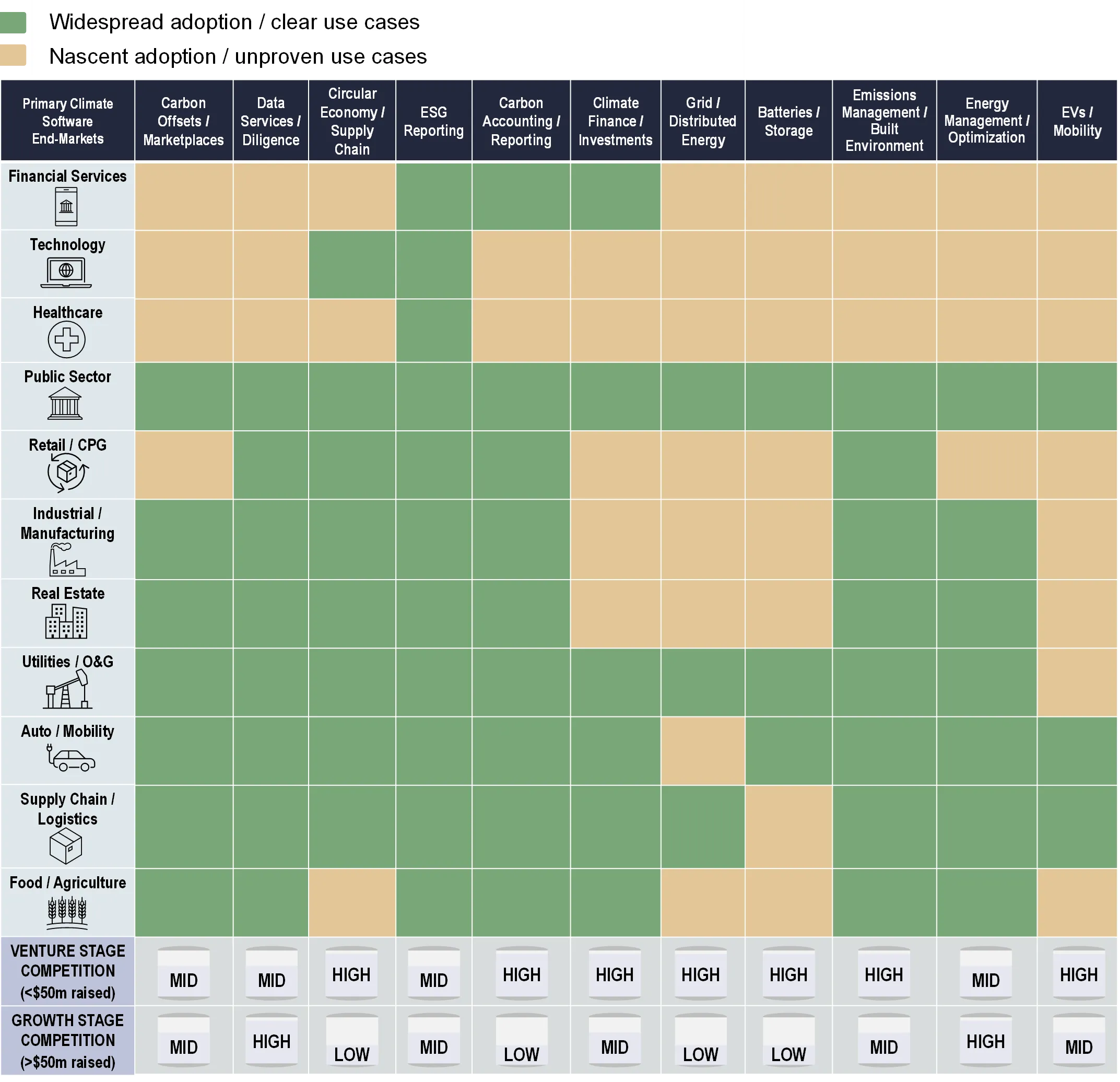
Much like we are seeing in the current AI “hype cycle,” the realization of climate software’s broad enterprise applicability will likely hand a competitive advantage to the first-mover investors who craft a well-defined thesis and identify the categories that maximize ROI. In Figure 8, we map these key categories to the verticals where we have seen evidence of enterprise customer adoption to date. We also outline the relative maturity of each category based on our analysis of market competitiveness at the venture and growth stages.
Figure 8: North America and Europe Climate Software YoY Investments by Type (2022)
Source: Lazard VGB Insights
Section 3: Category Overviews + Emerging Innovators by Stage
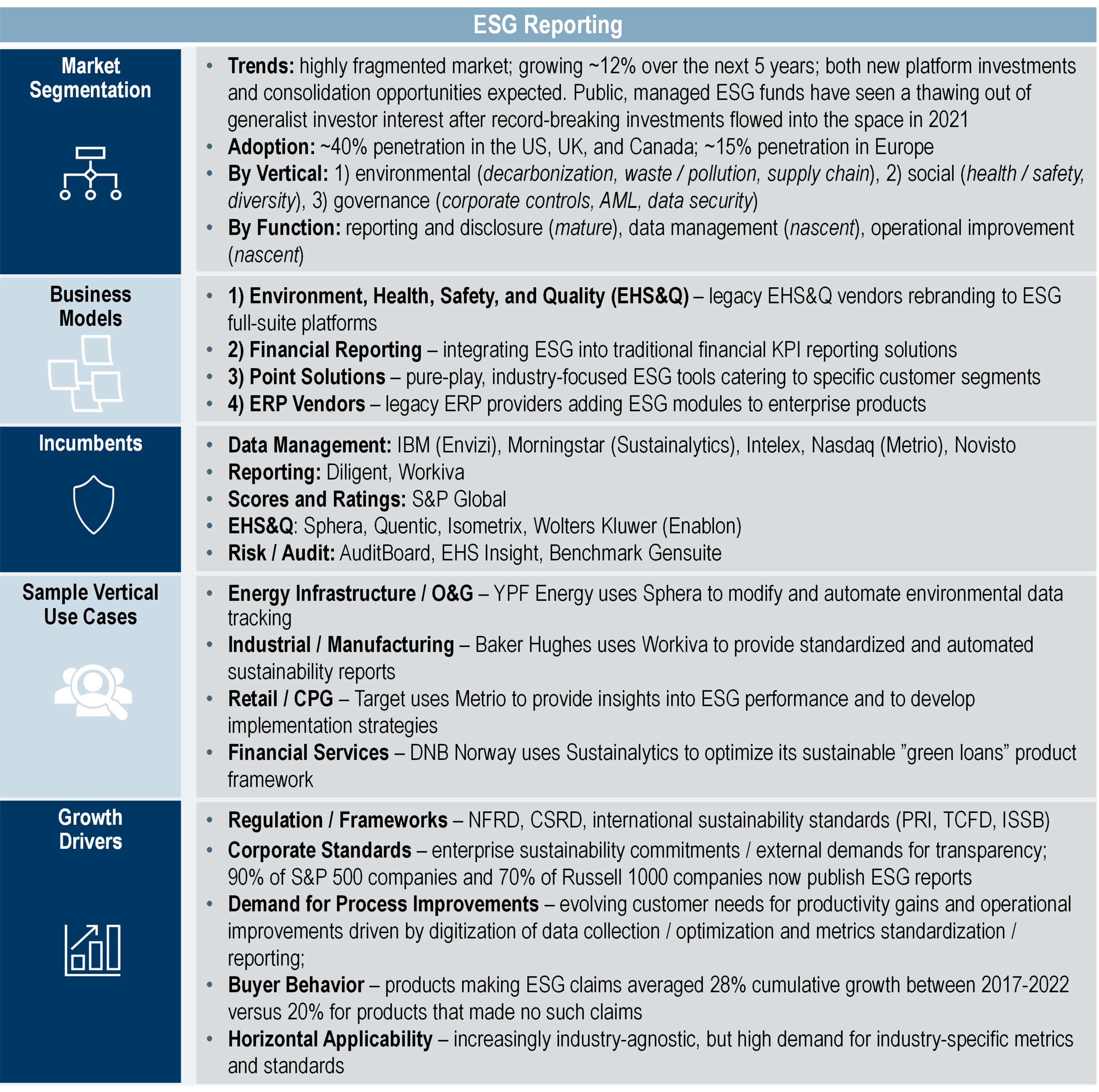
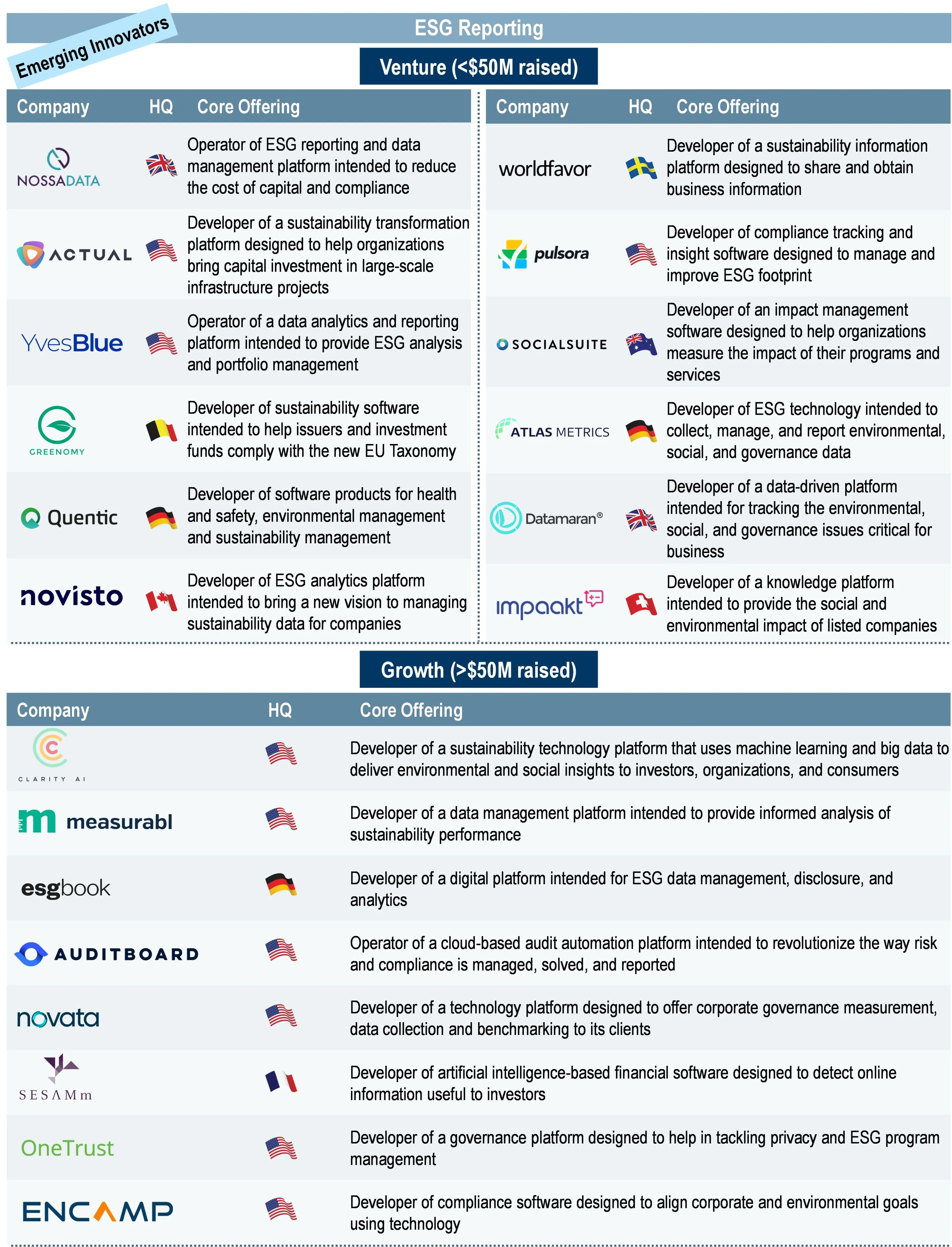
Sources: Lazard VGB Insights, McKinsey, Pitchbook Data, Inc., Strategy&
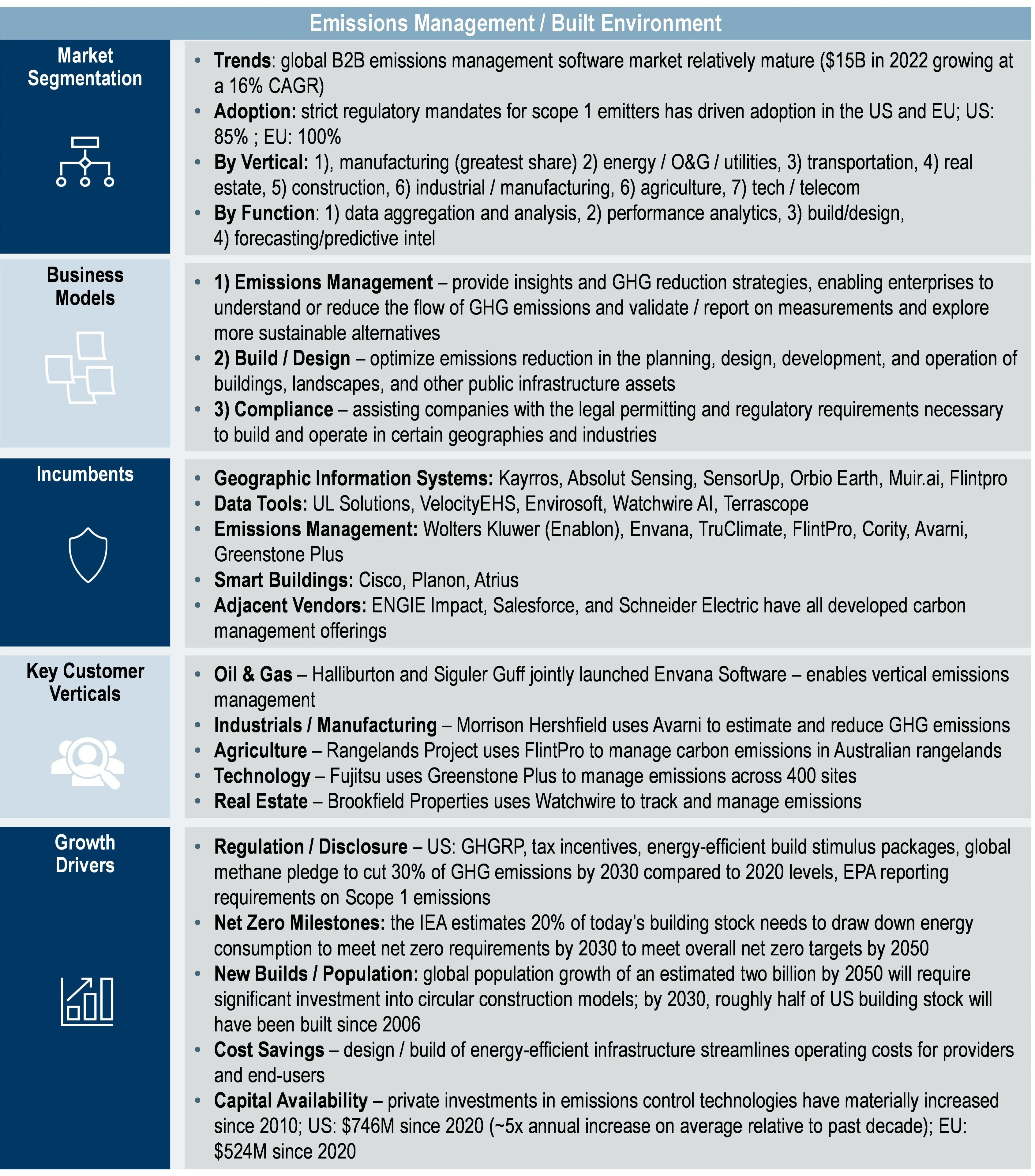
Sources: Lazard VGB Insights, EPA, Cleantech Group, IEA, Pitchbook Data, Inc., Verdantix
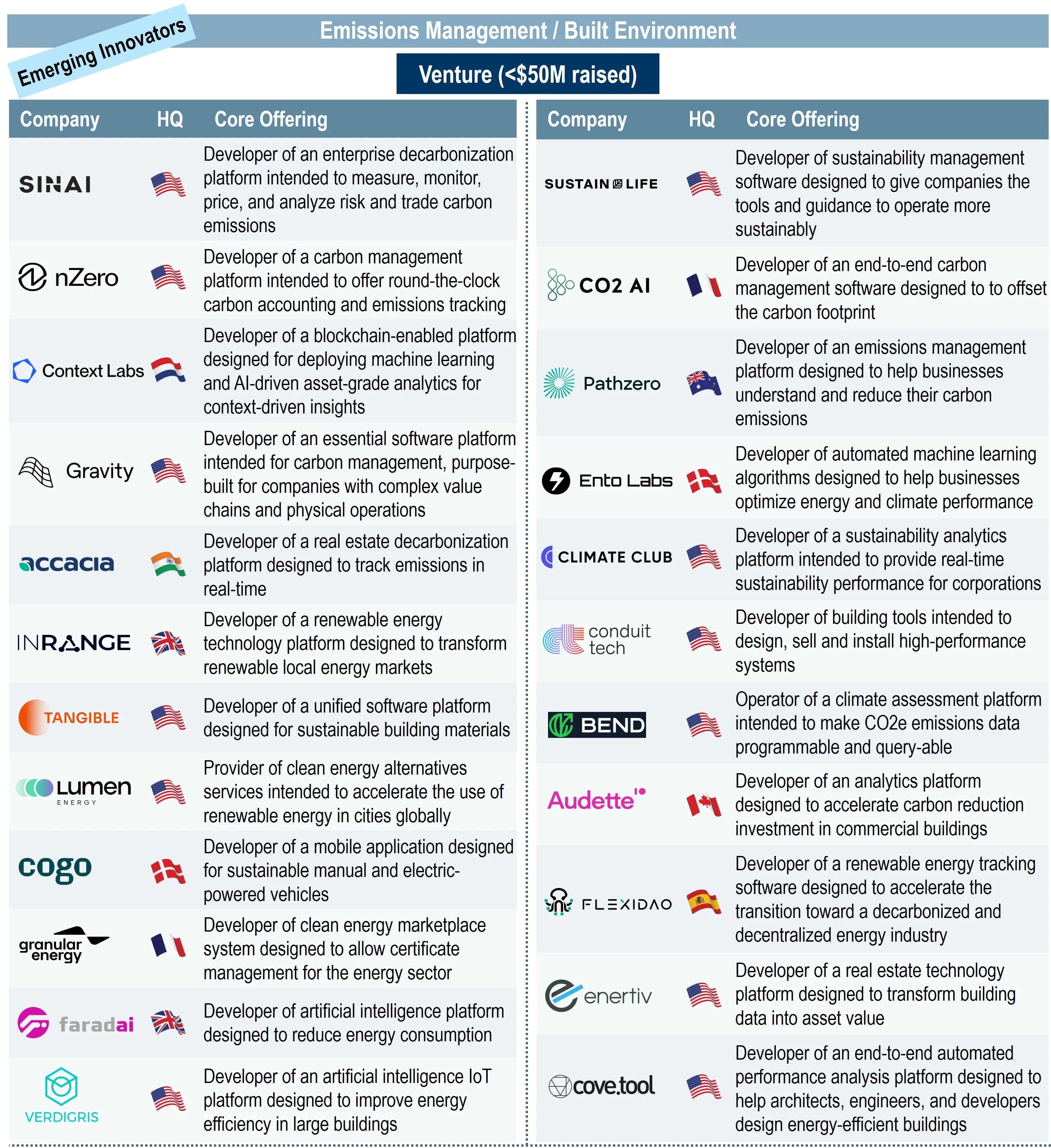
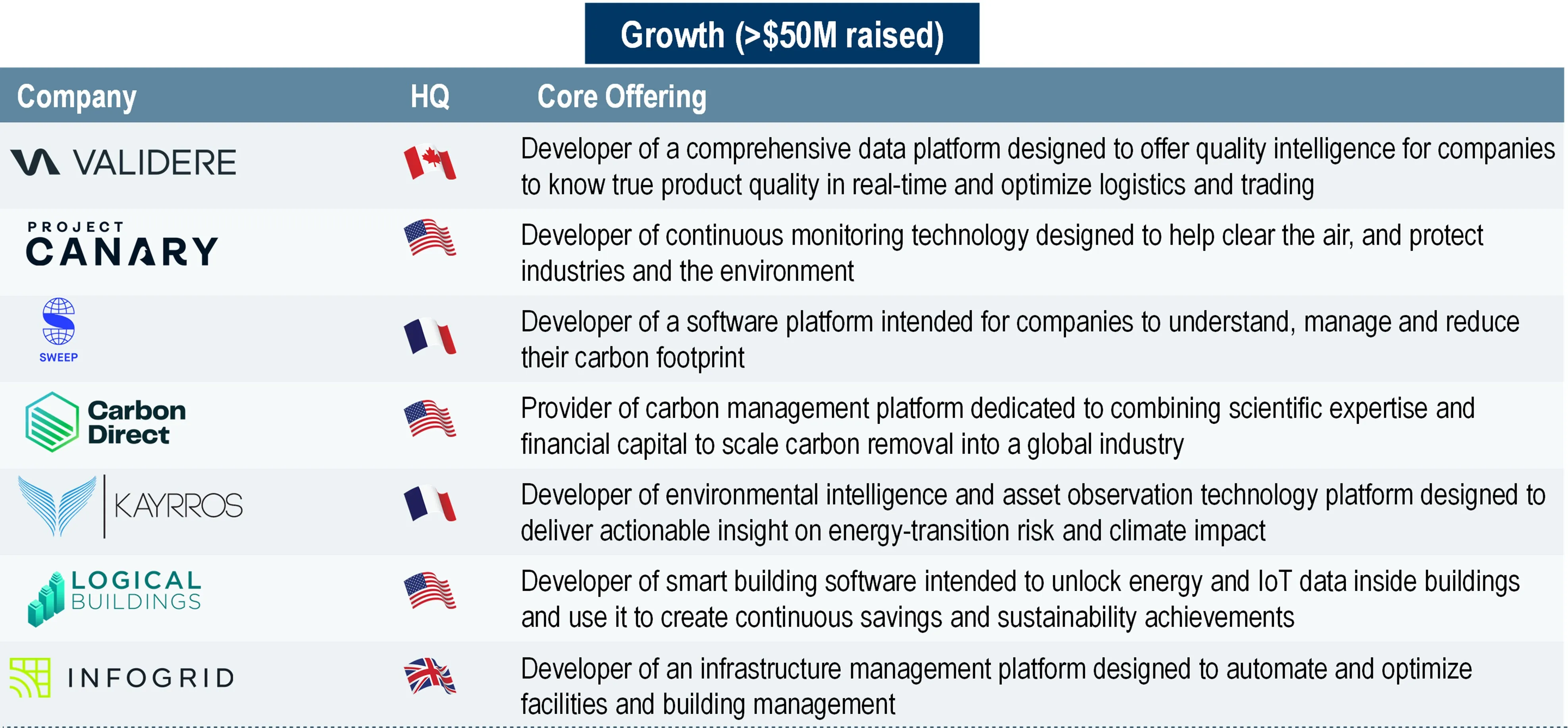
Sources: Lazard VGB Insights, Pitchbook Data, Inc.
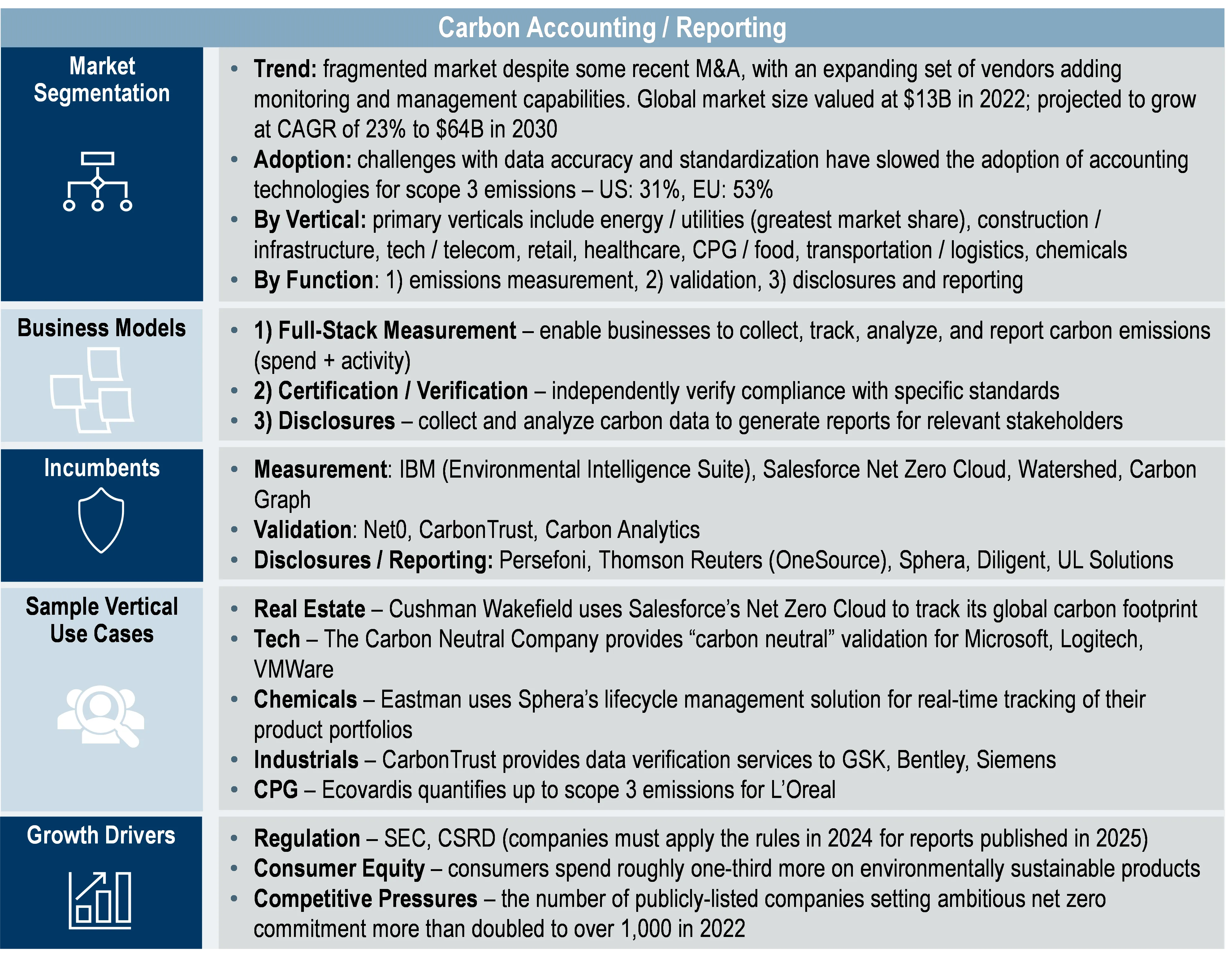
Sources: Fortune Business Insights, Net Zero Stocktake, Pitchbook Data, Inc., Simon Kucher & Partners, WRI, Lazard VGB Insights
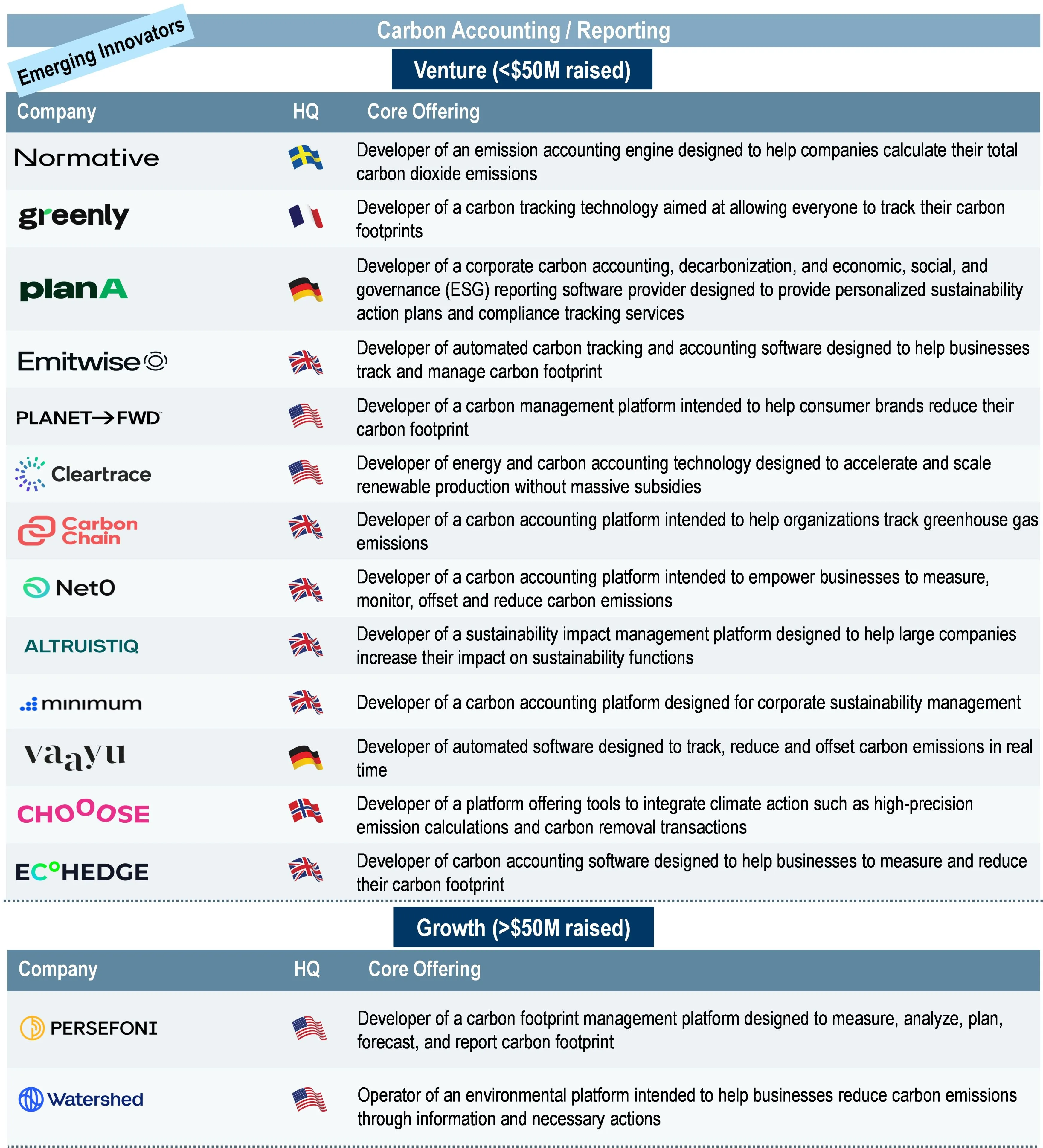
Sources: Lazard VGB Insights, Pitchbook Data, Inc.
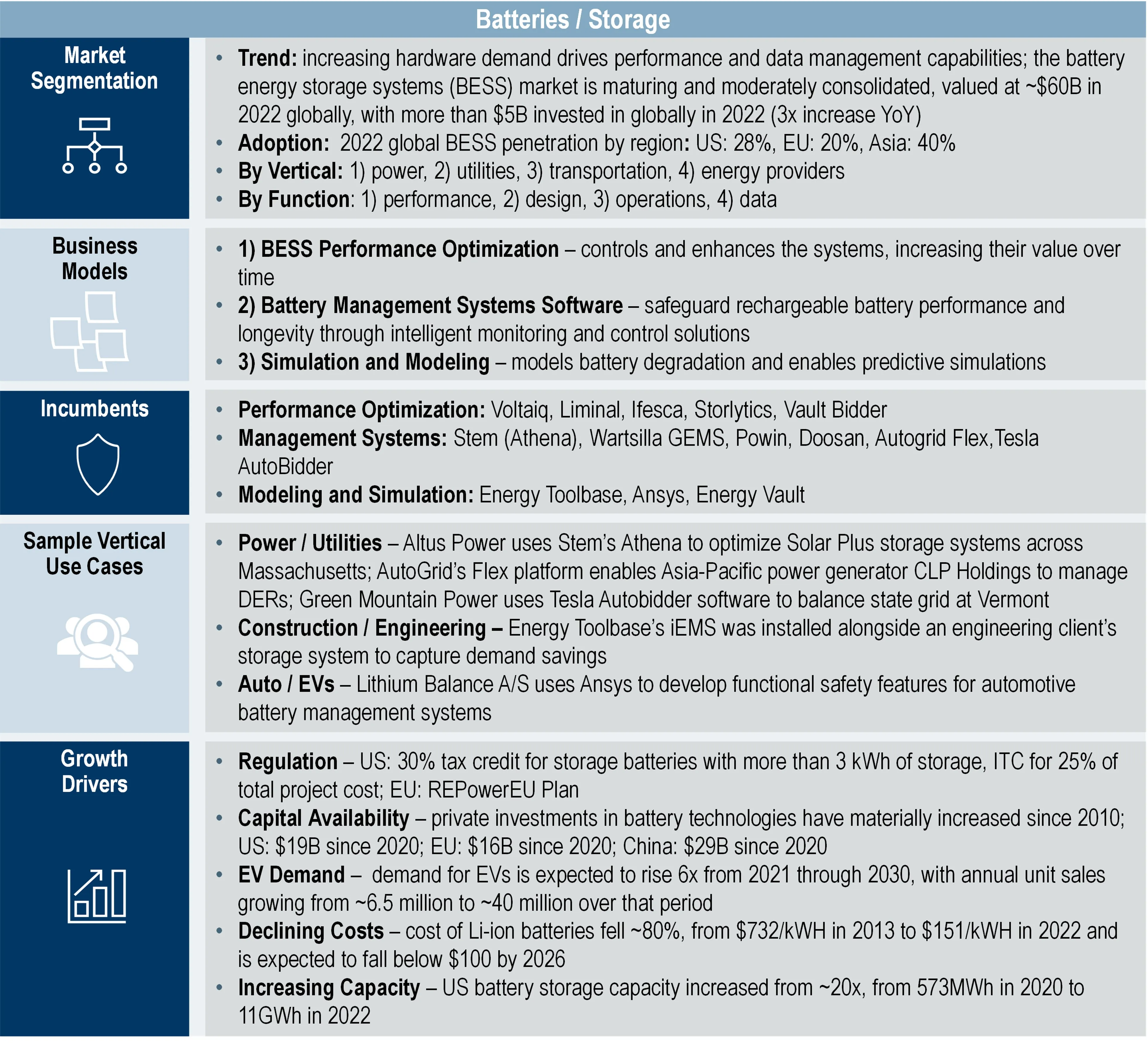
Sources: Lazard VGB Insights, BNEF, EIA, McKinsey, Pitchbook Data, Inc., RystadEnergy
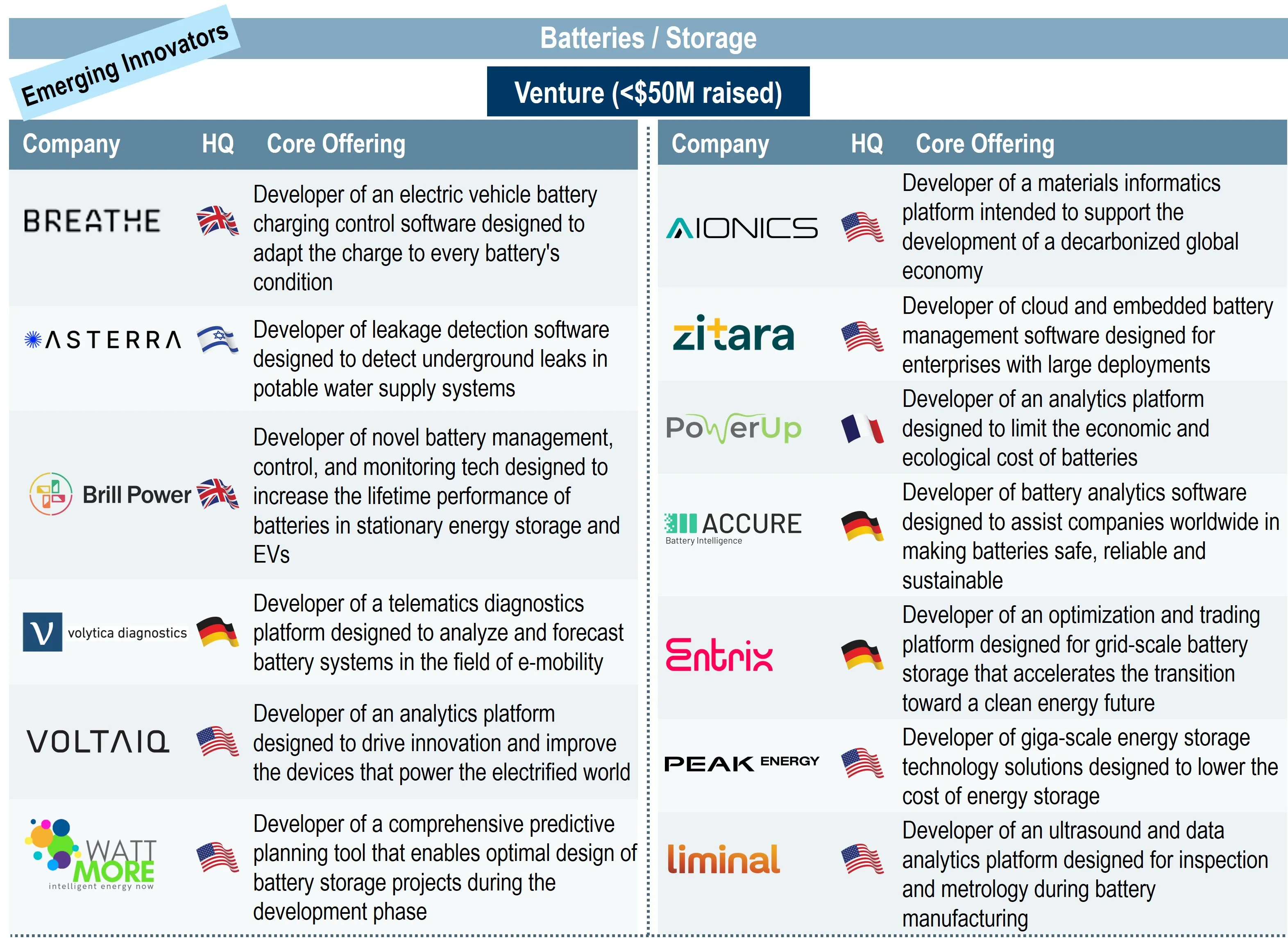
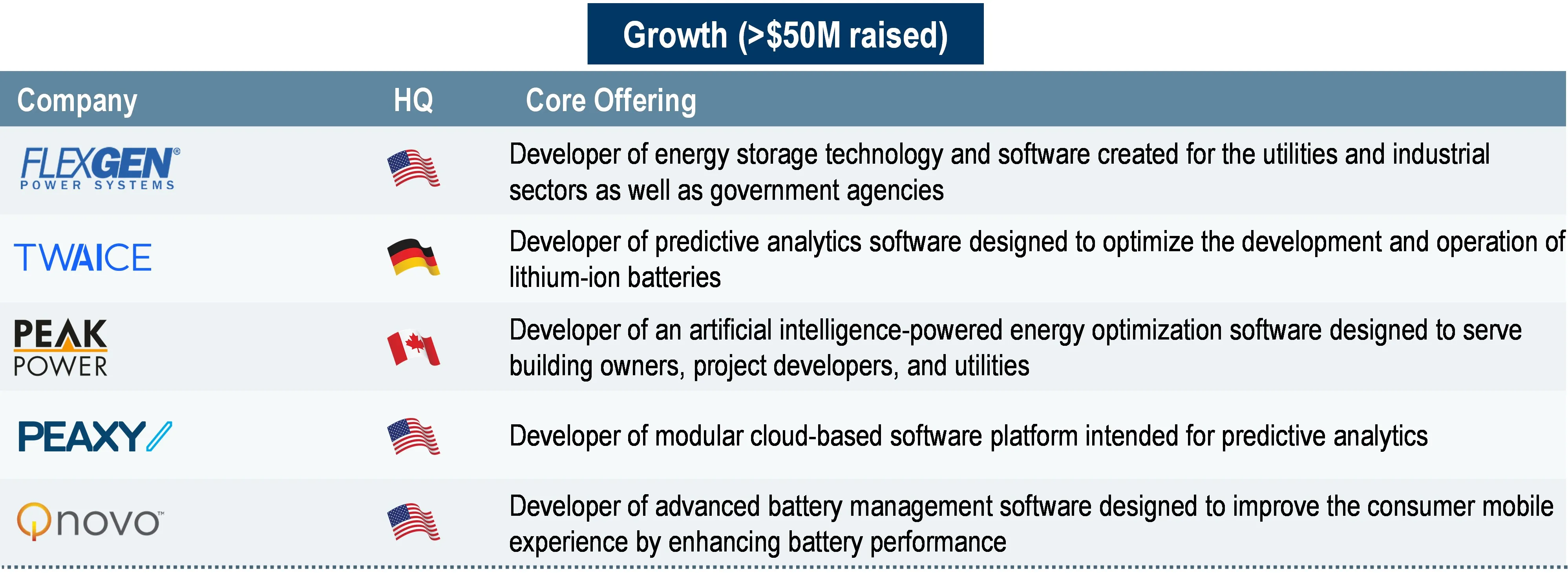
Sources: Lazard VGB Insights, Pitchbook Data, Inc.
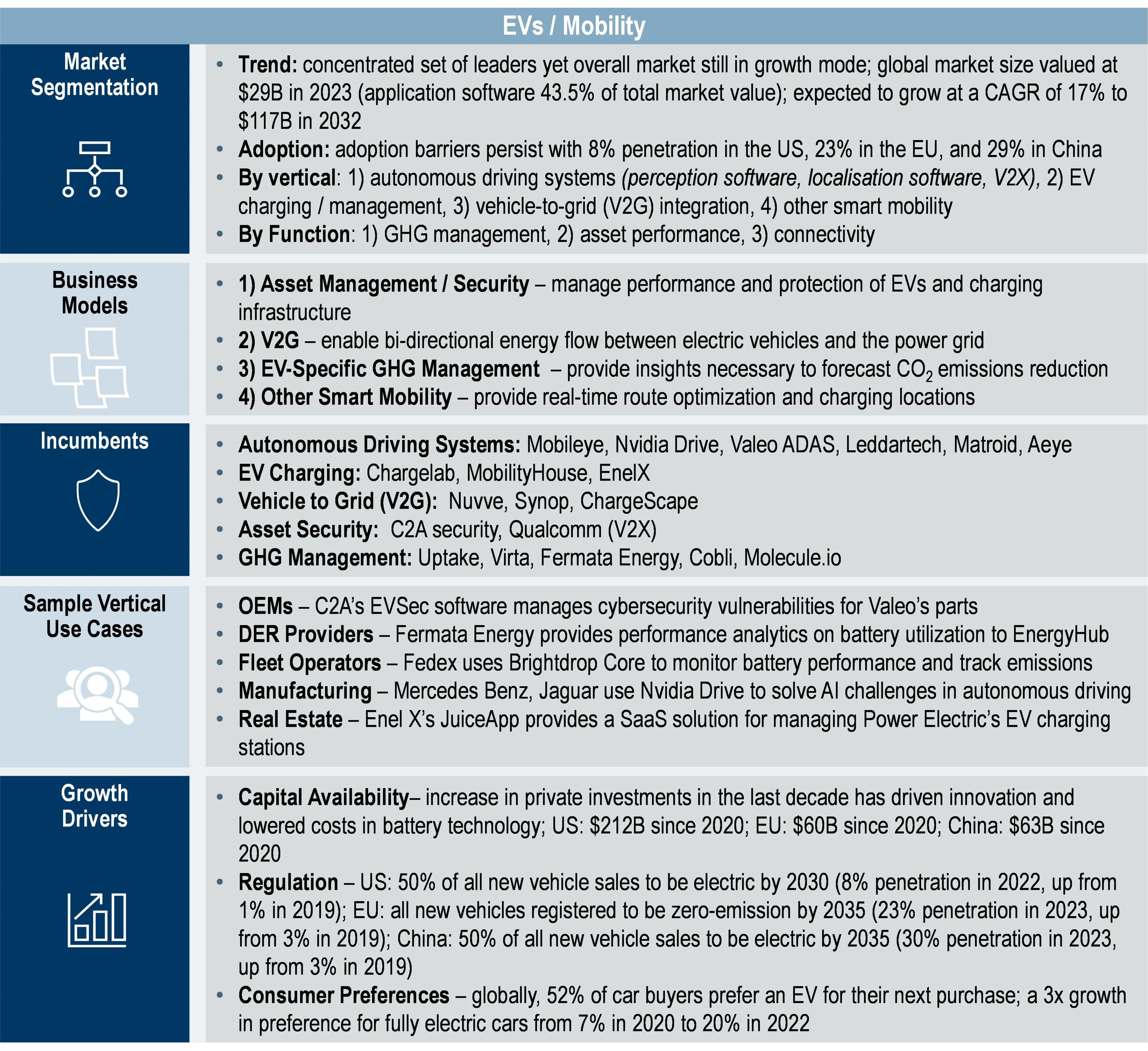
Sources: EY, Pitchbook Data, Inc., Precedence Research, Lazard VGB Insights
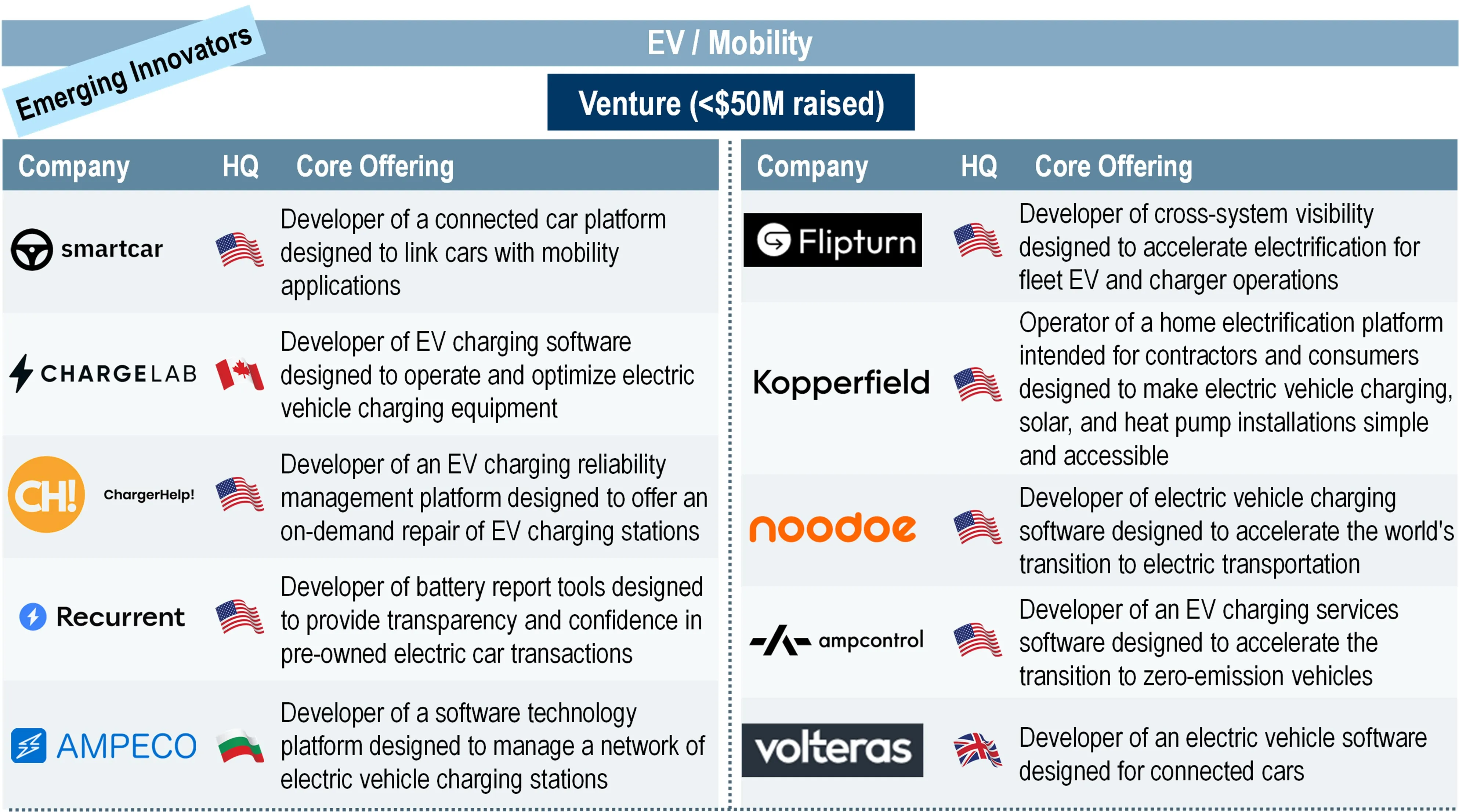
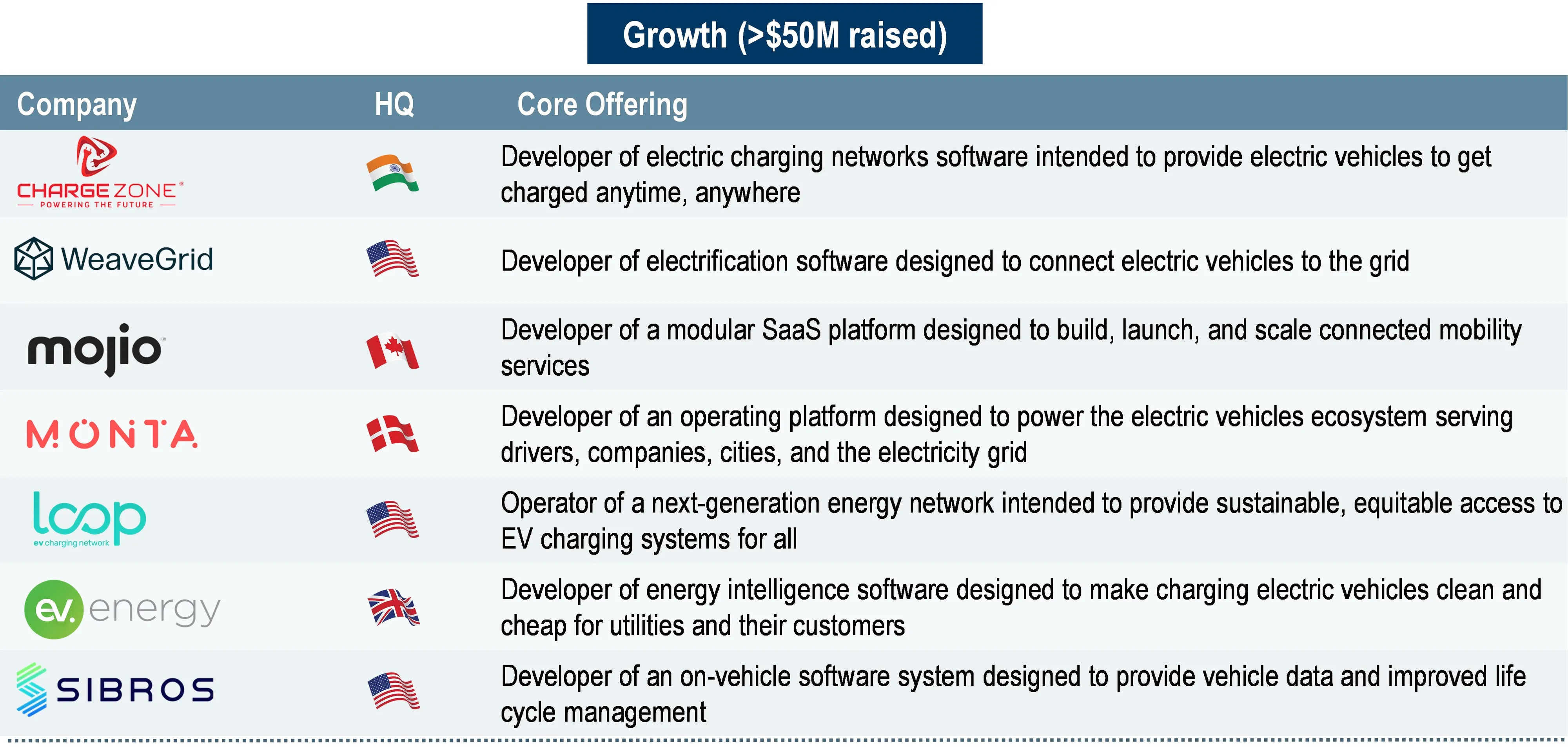
Sources: Lazard VGB Insights, Pitchbook Data, Inc.
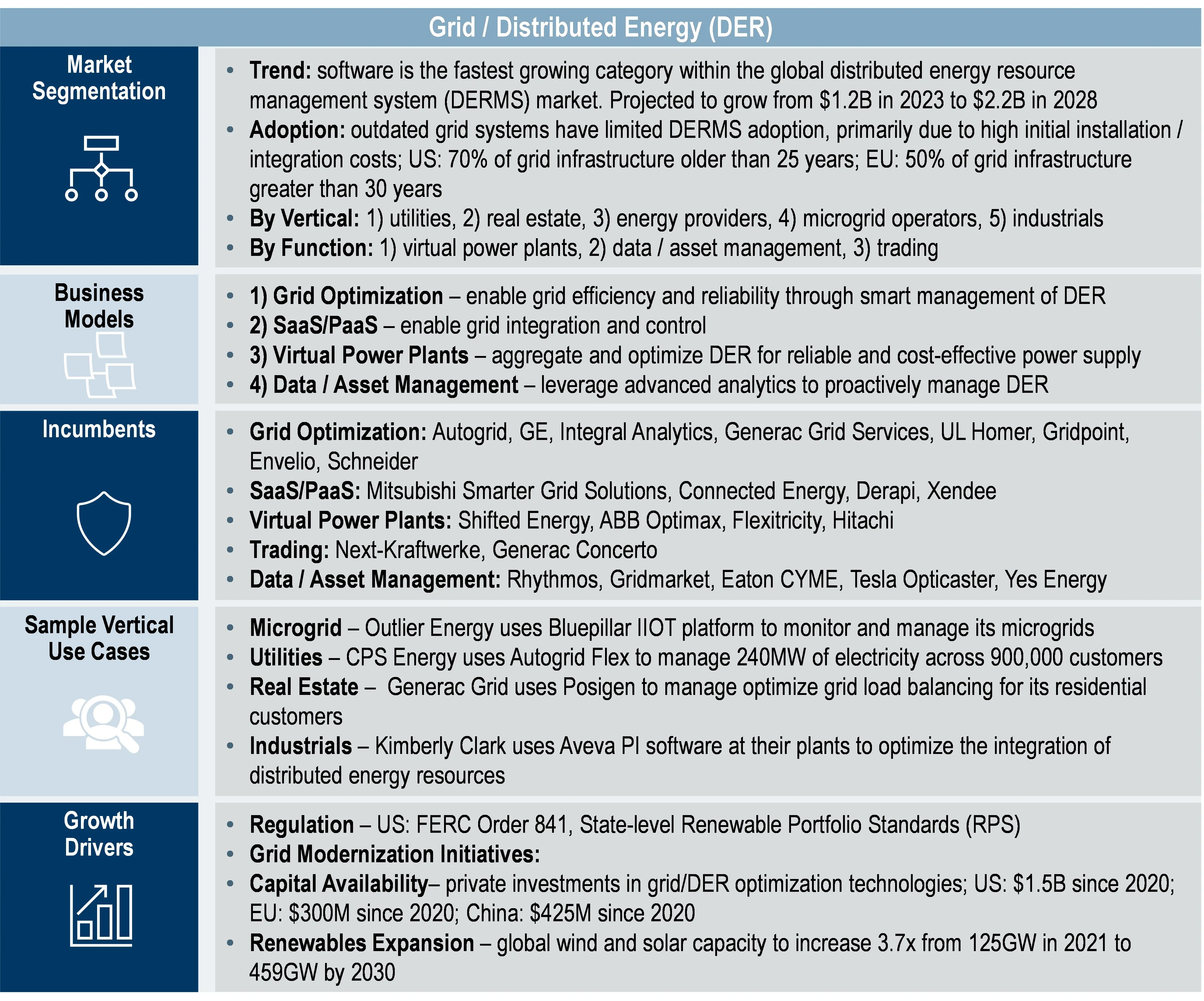
Sources: Lazard VGB Insights, Pitchbook Data, Inc., McKinsey, Mordor Intelligence, S&P Global
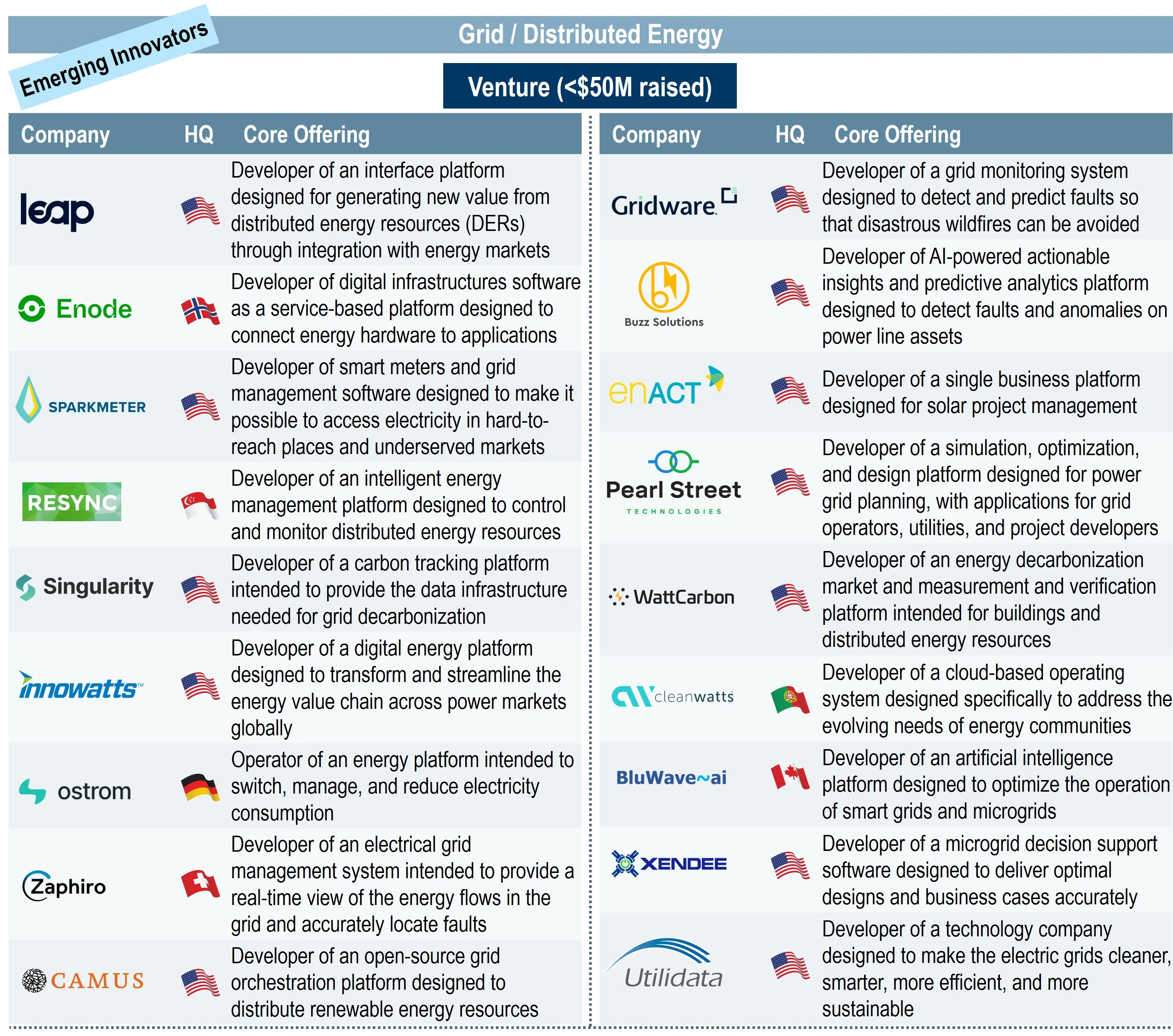
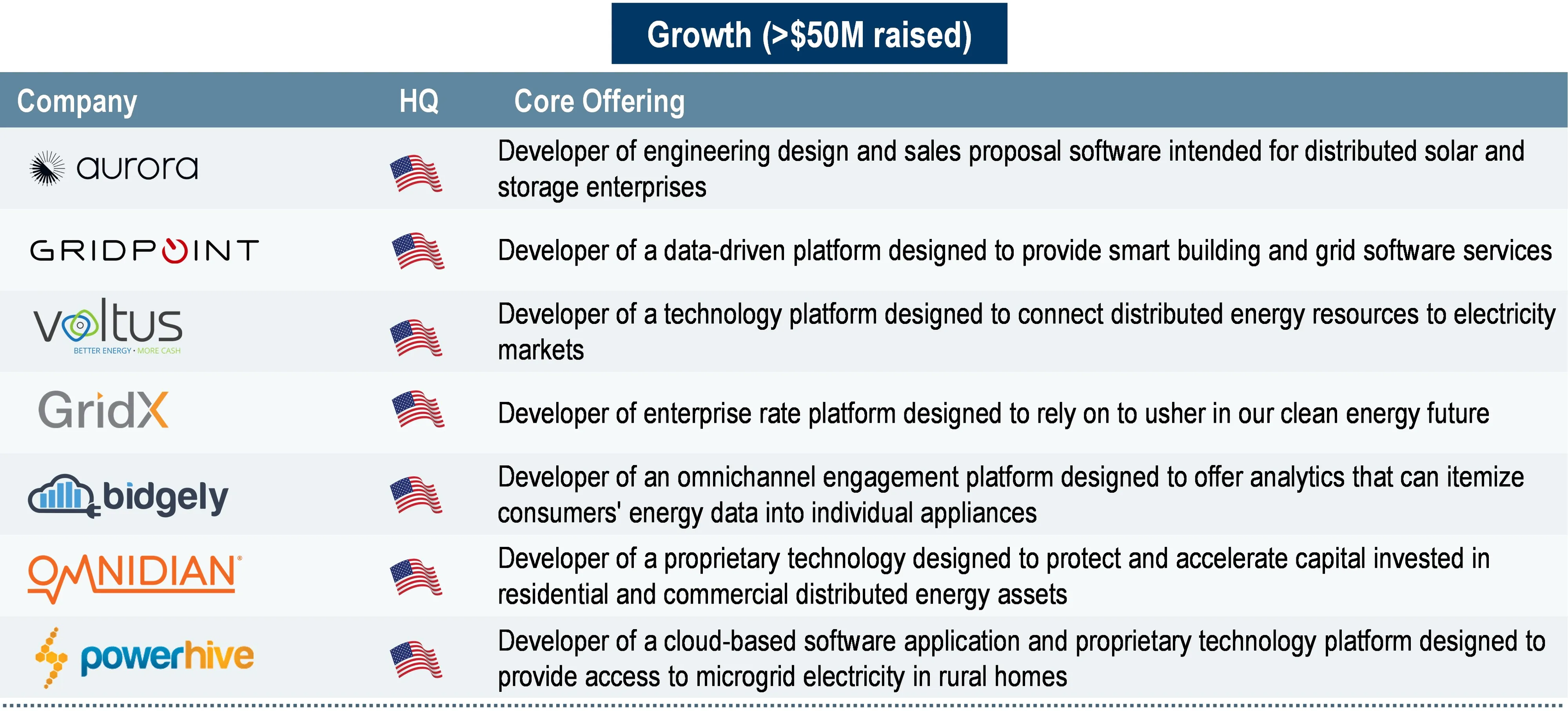
Sources: Lazard VGB Insights, Pitchbook Data, Inc.
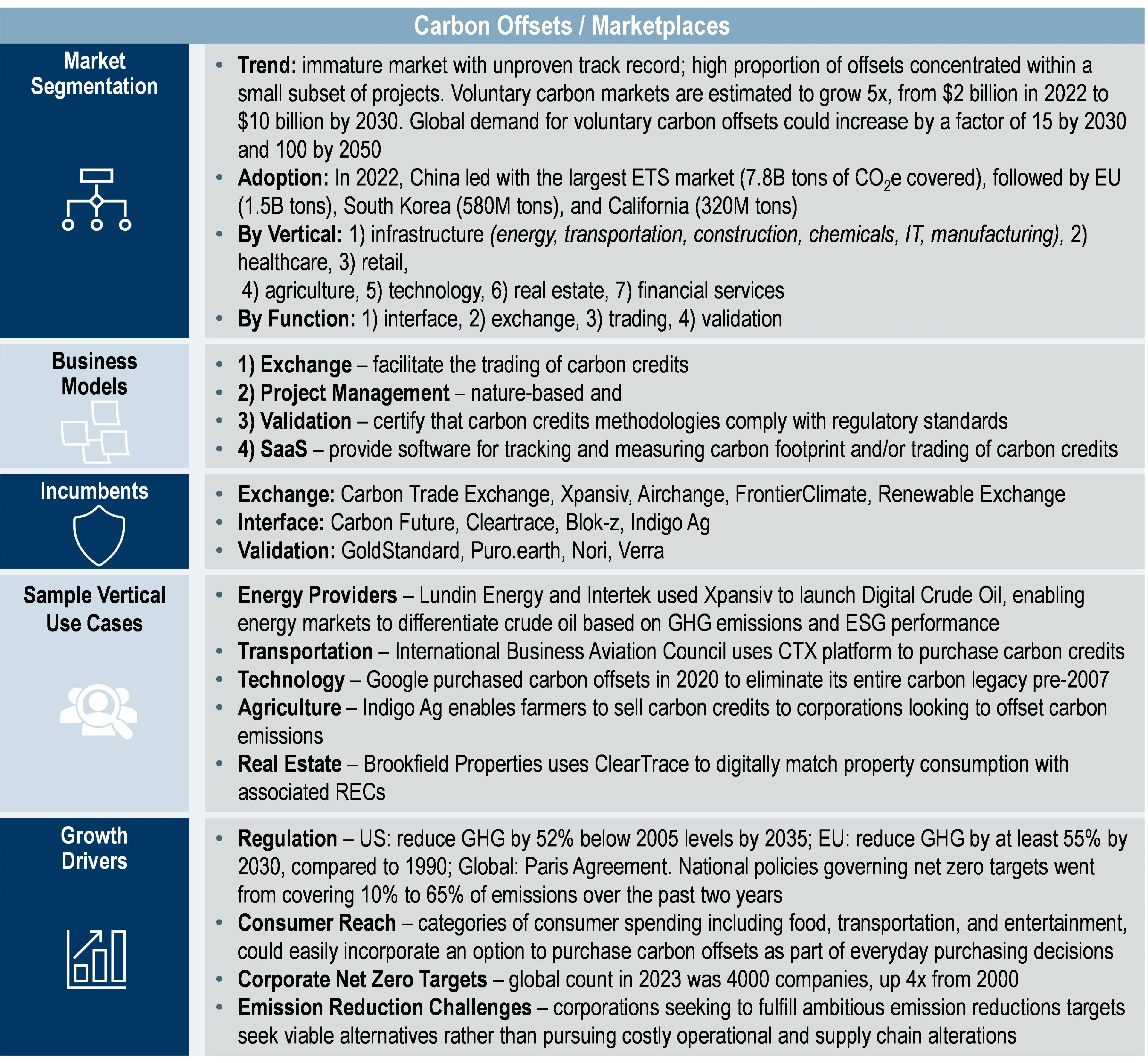
Sources: Lazard VGB Insights, McKinsey, Pitchbook Data, Inc., Forbes
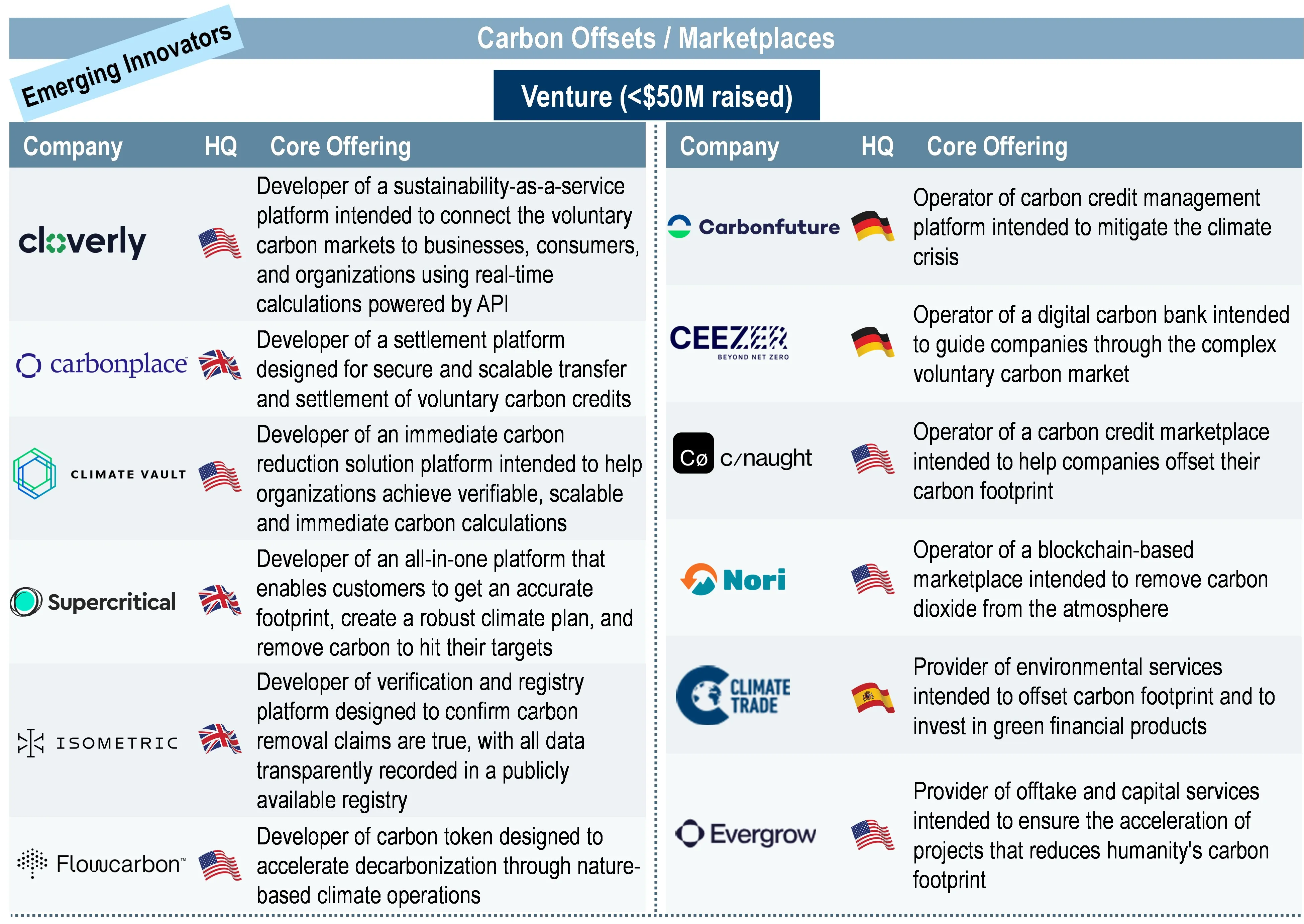
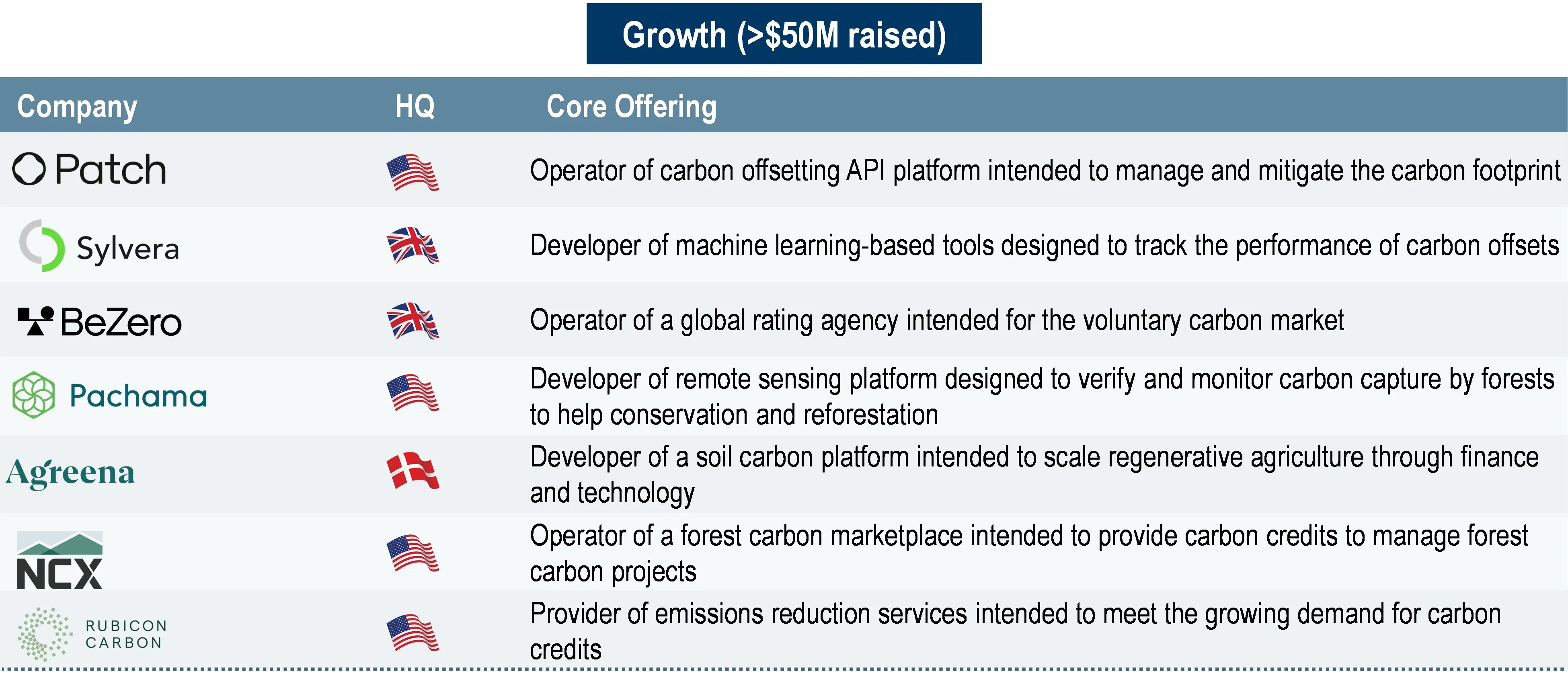
Sources: Lazard VGB Insights, Pitchbook Data, Inc.
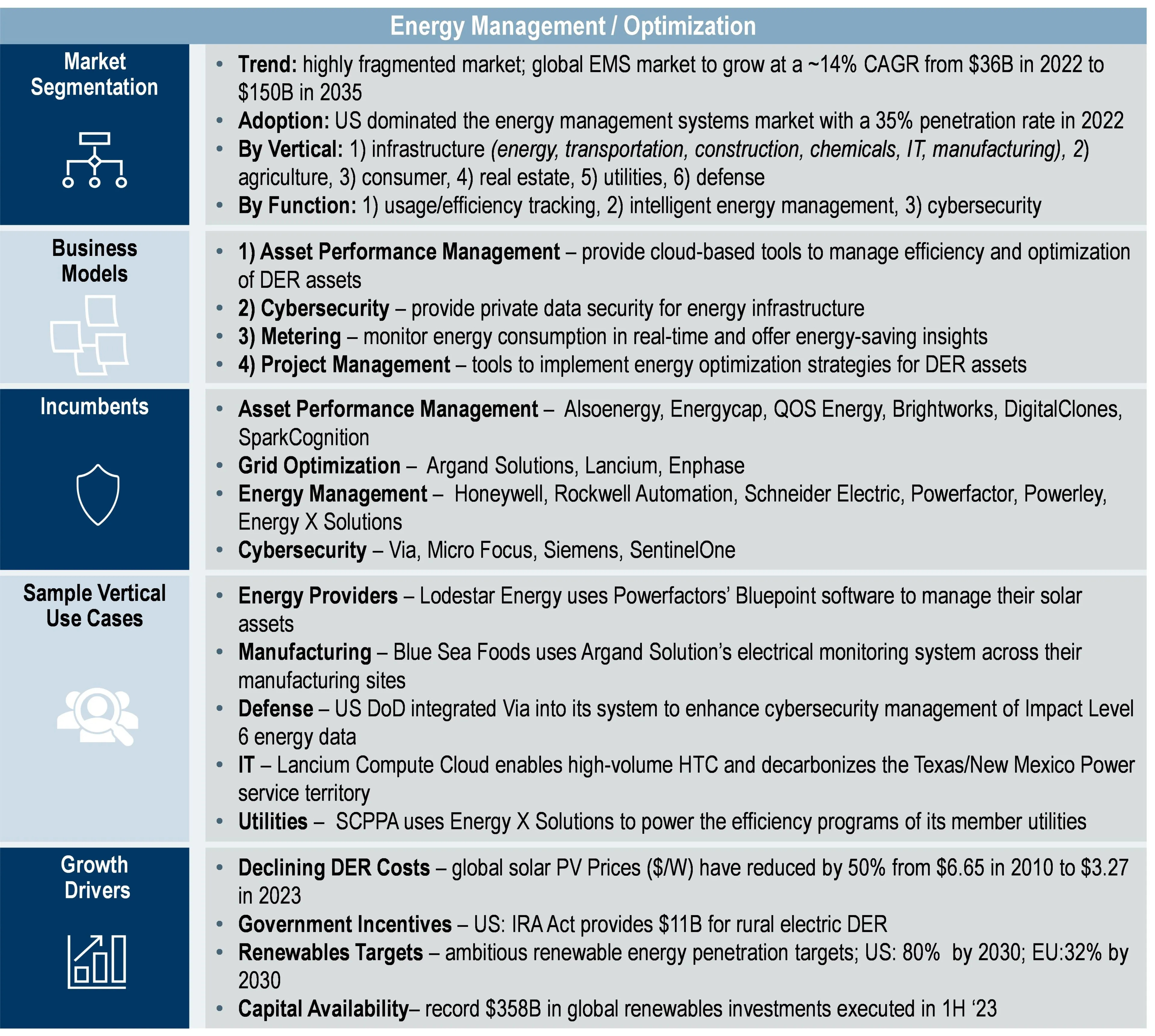
Sources: Lazard VGB Insights, Bloomberg, Global Newswire, Pitchbook Data, Inc., Research Nester, SEIA
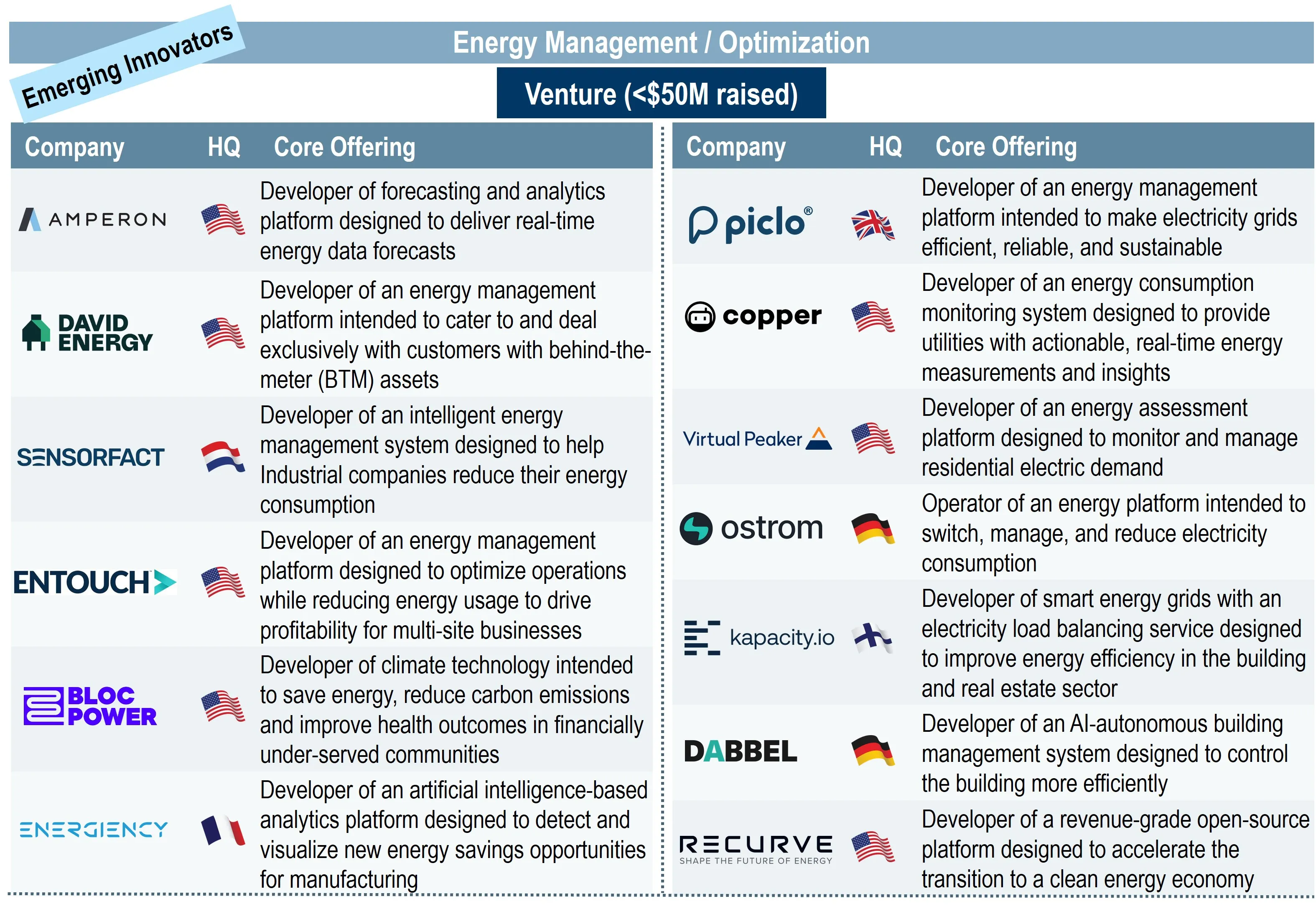
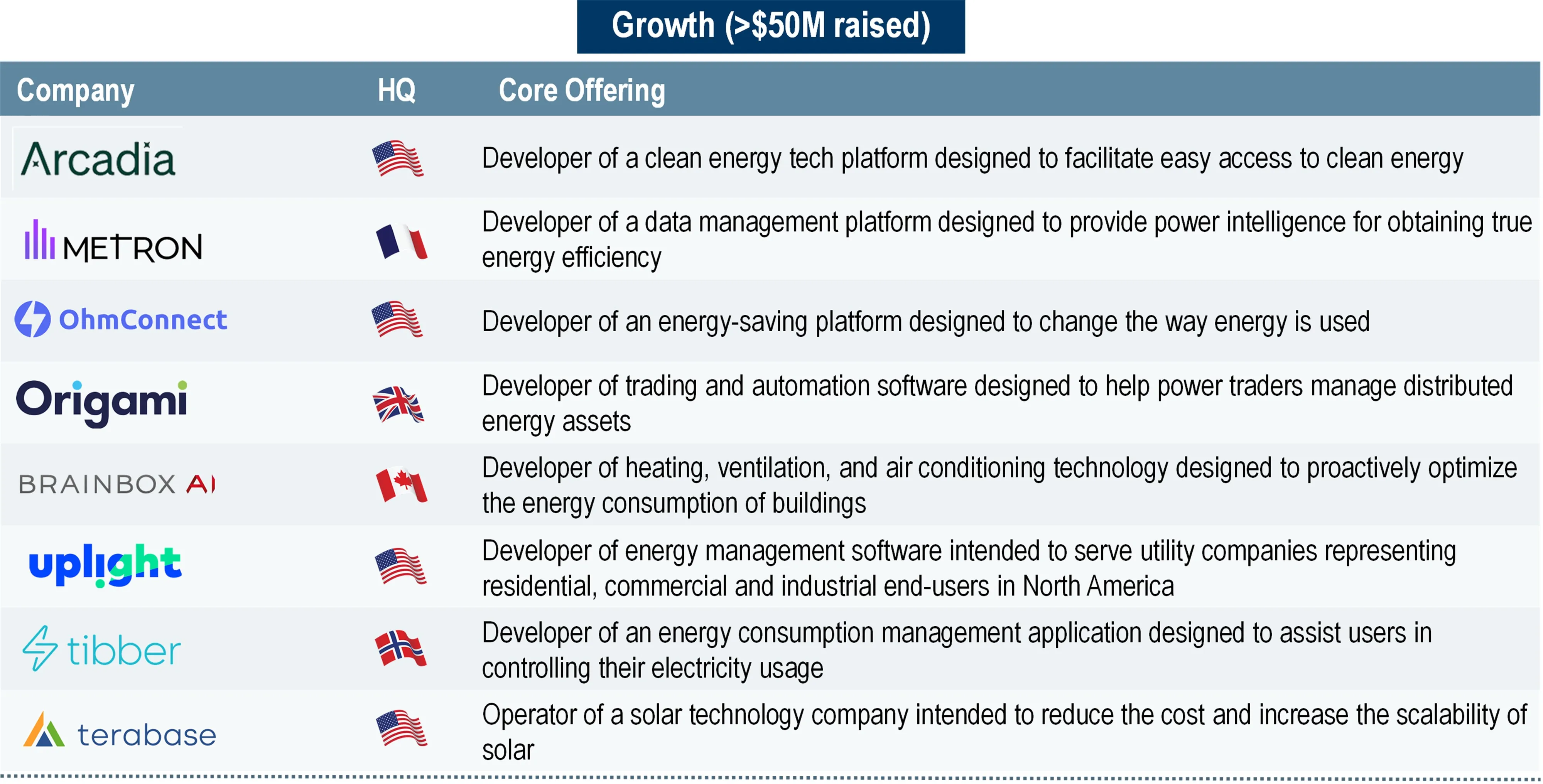
Sources: Lazard VGB Insights, Pitchbook Data, Inc.
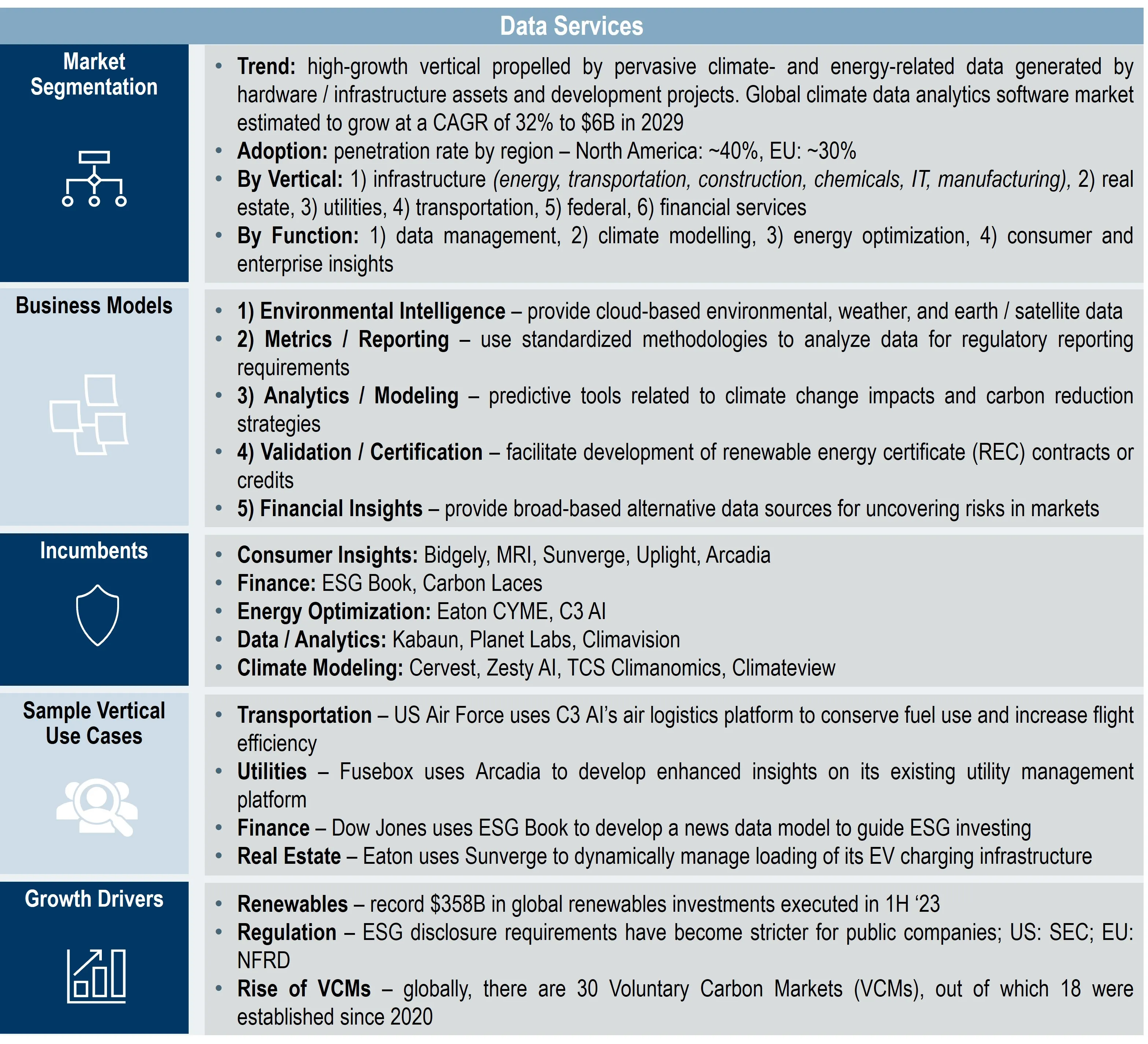
Sources: Lazard VGB Insights, Maximize Market Research, Pitchbook Data, Inc., Bloomberg, Verdantix
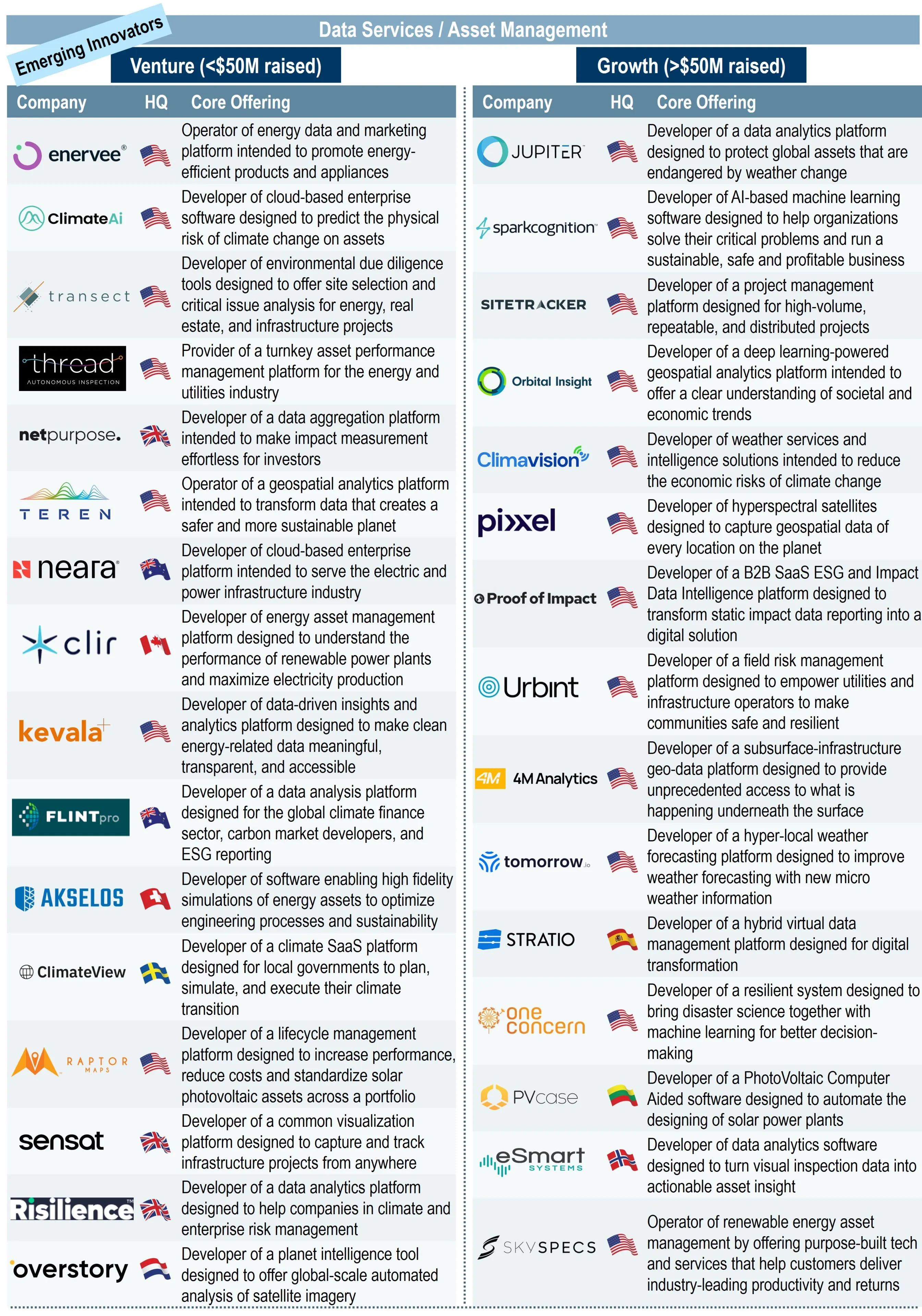
Sources: Lazard VGB Insights, Pitchbook Data, Inc.
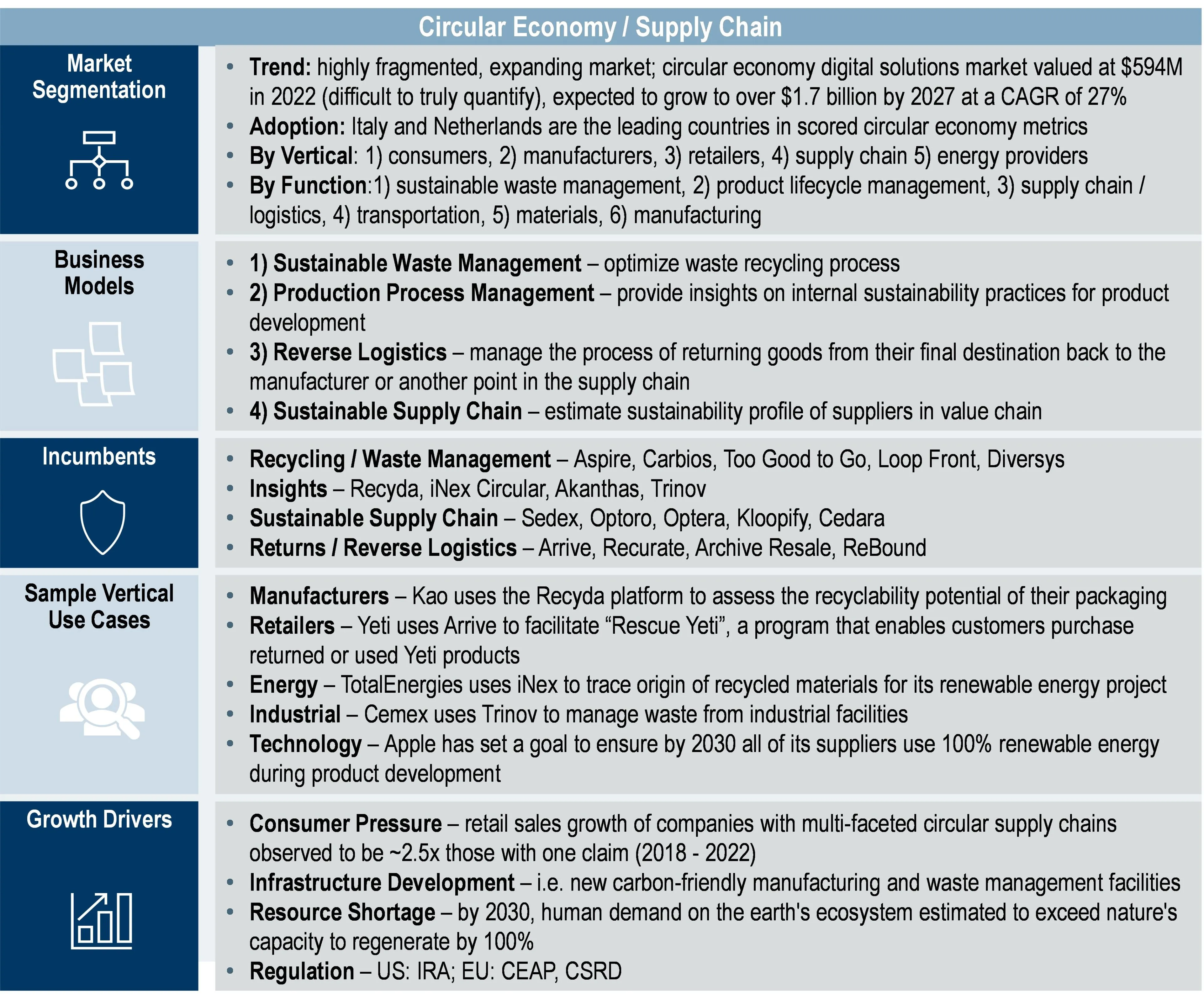
Sources: Lazard VGB Insights, Circularity Gap World, Knowledge for Policy, McKinsey, BCG, Pitchbook Data, Inc., Sustainability Magazine, Verdantix
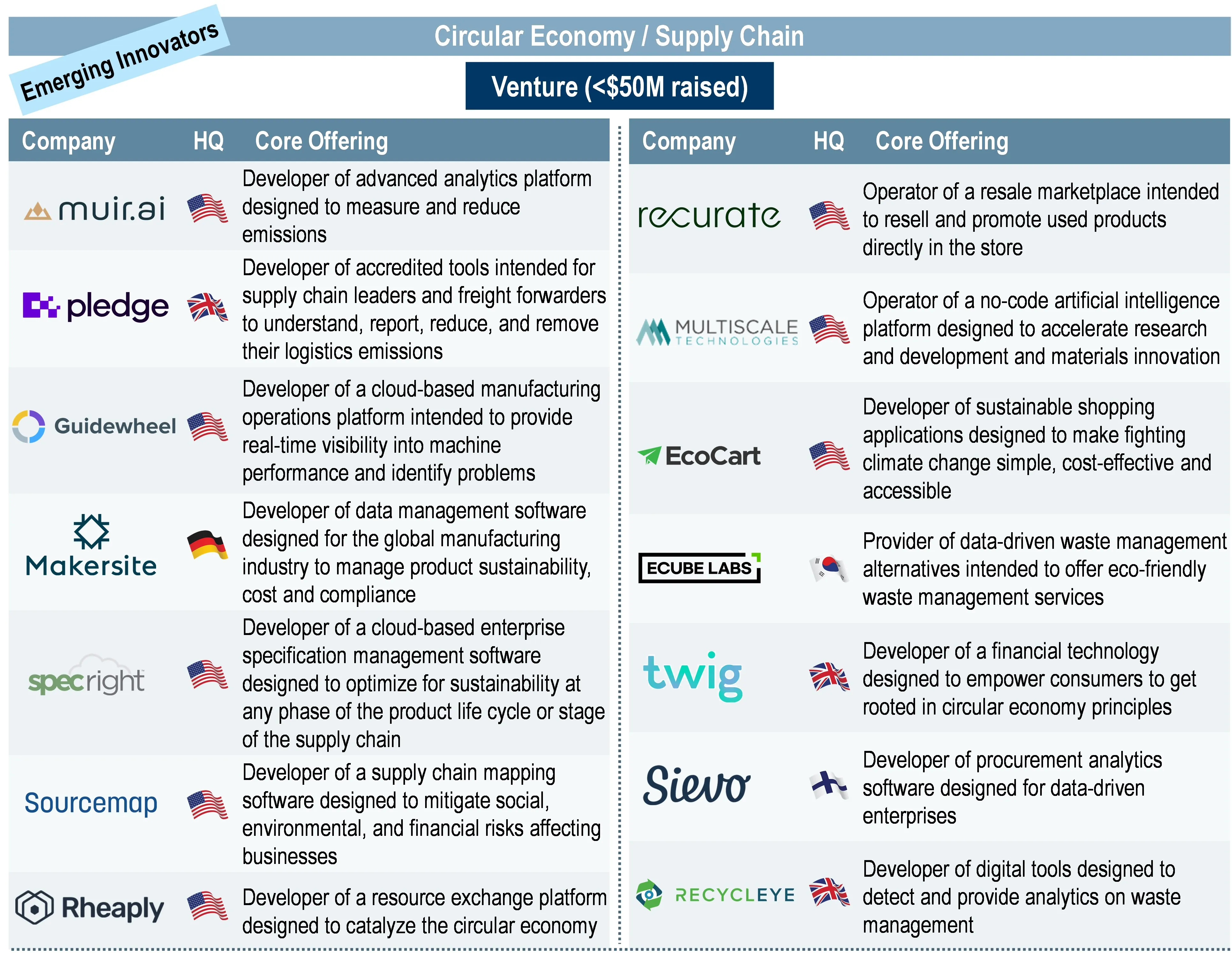
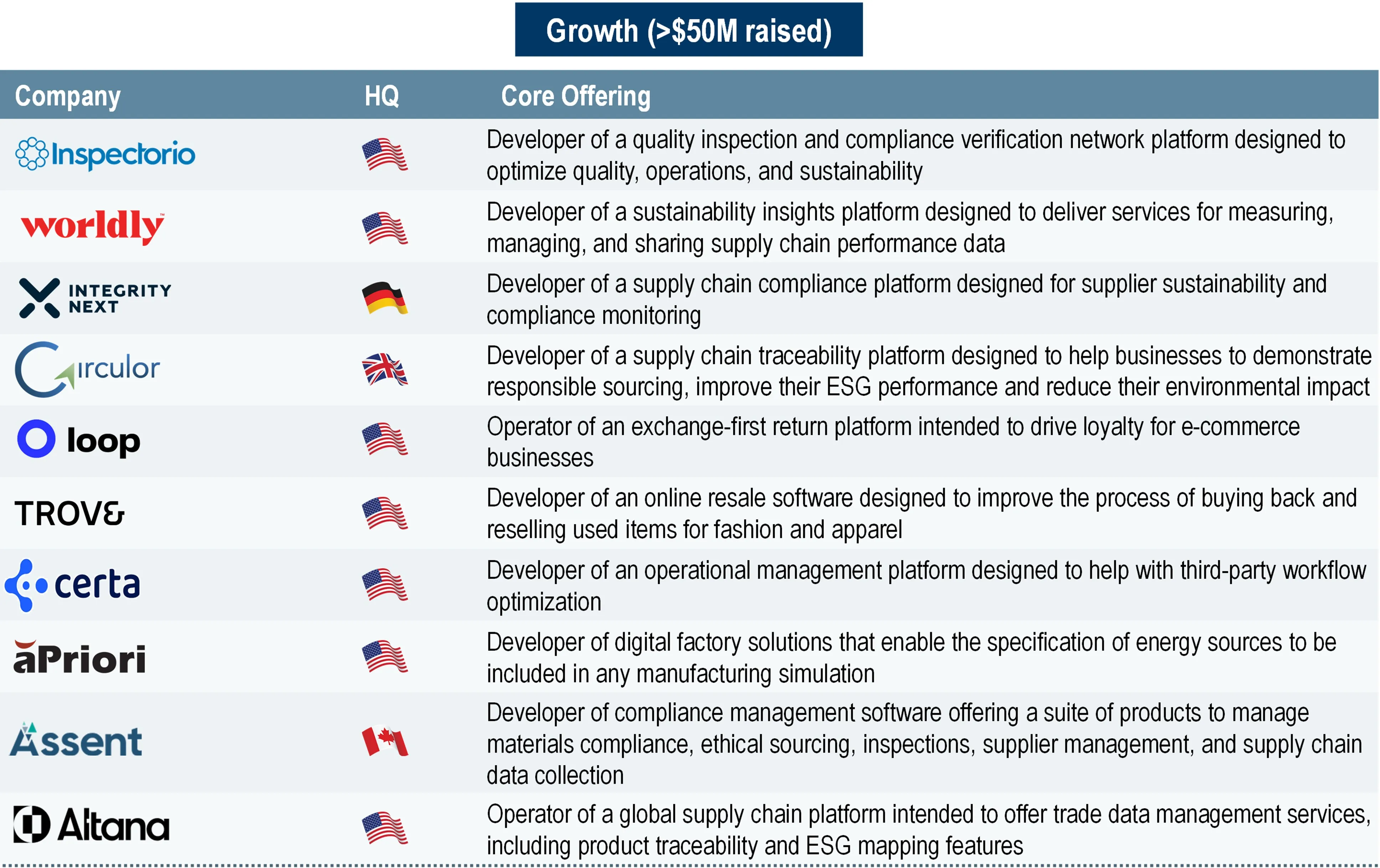
Sources: Lazard VGB Insights, Pitchbook Data, Inc.
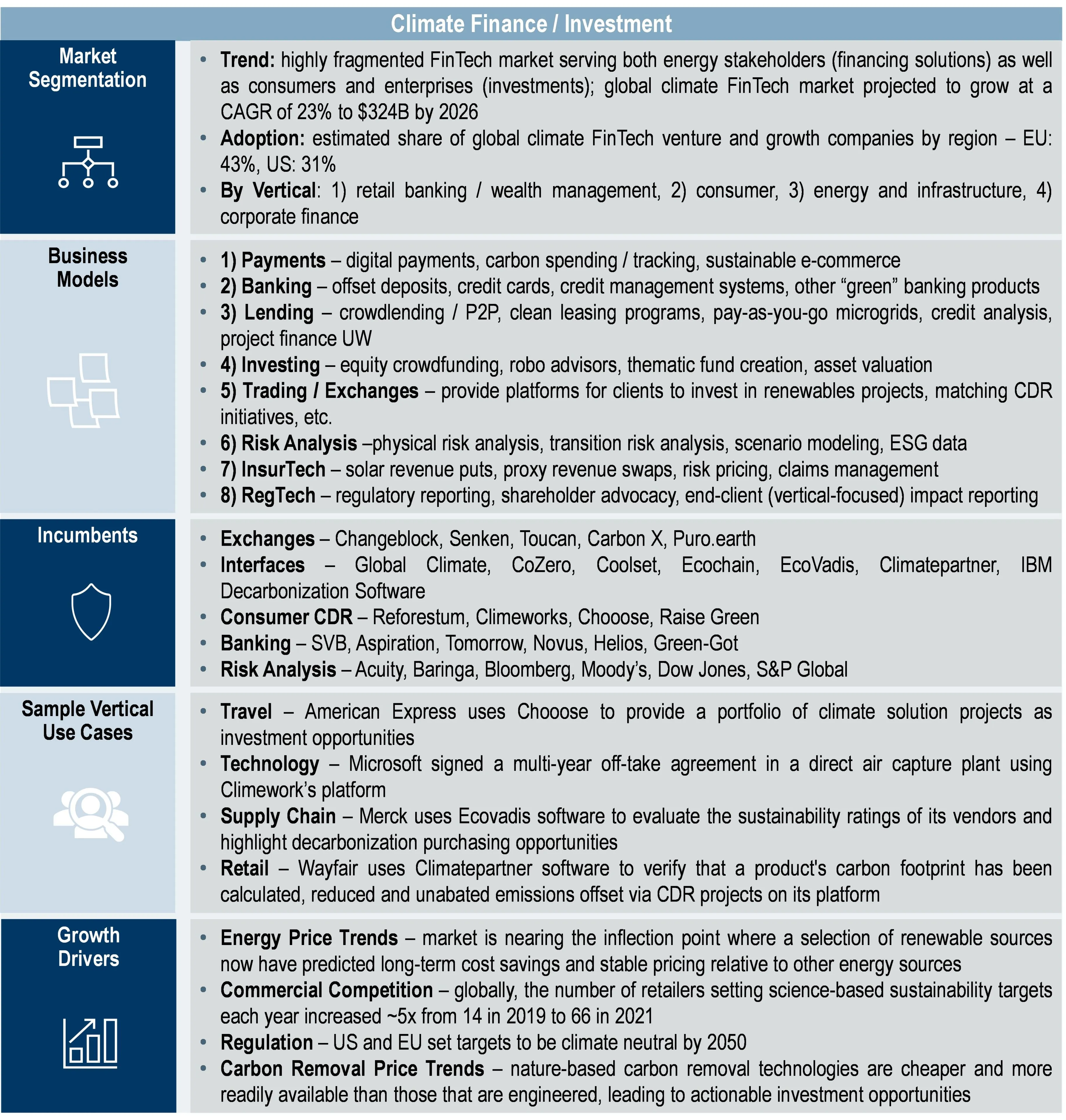
Sources: Lazard VGB Insights, Coherent Market Insights, New Energy Nexus, McKinsey, Pitchbook Data, Inc., BCG, Citi Ventures
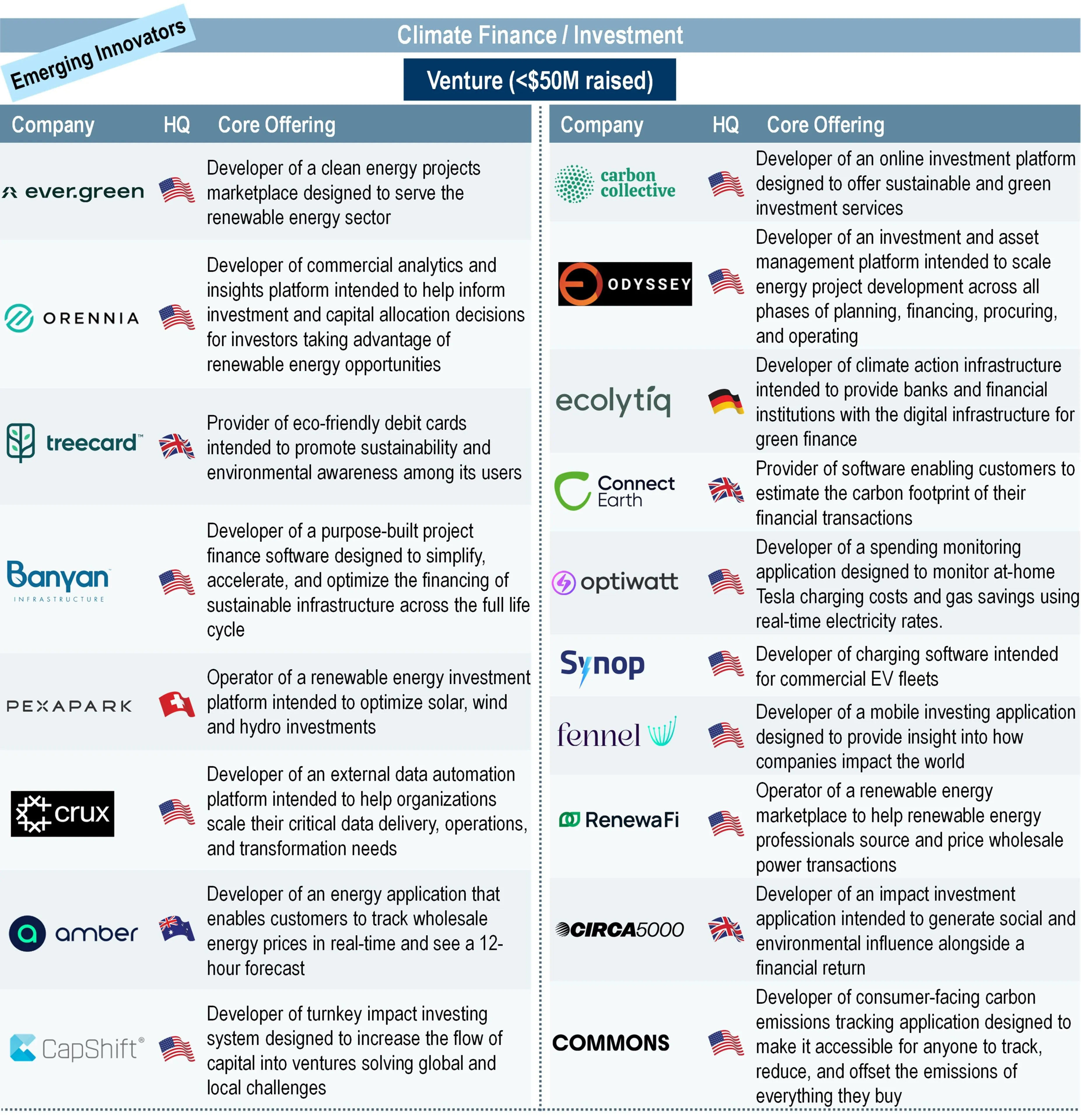
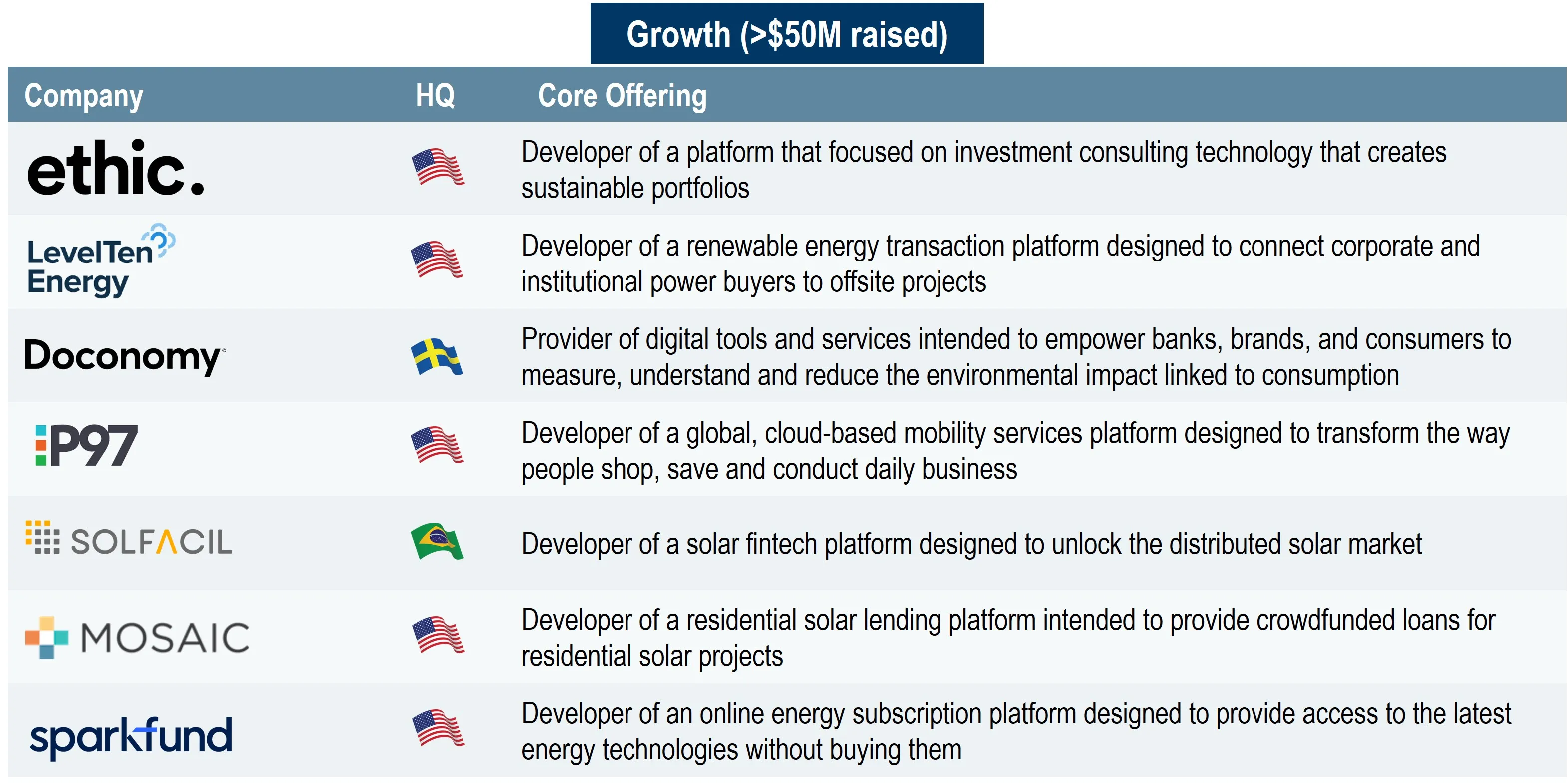
Sources: Lazard VGB Insights, Pitchbook Data, Inc.