Lazard Geopolitical Advisory (LGA) is closely monitoring the changing geopolitical environment. Here are five of the most important trends to watch for the coming year.
The New Economic Nationalism
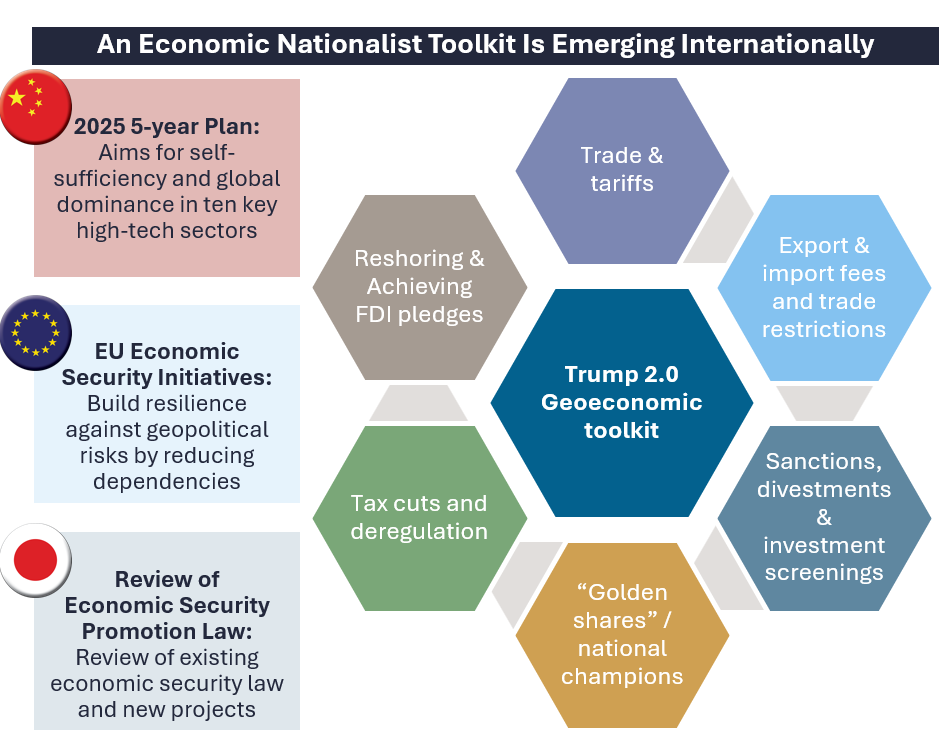
Washington’s fusion of muscular economic interventionism and transactional dealmaking has forged a new industrial strategy playbook that is reshaping the relationship between state and market. In 2026, aspects of the US playbook will go global.
As governments adopt variations of the US’ interventionist repertoire, businesses will settle into a new normal in which they must anticipate greater scrutiny, manage competing demands from multiple capitals, and identify opportunities for government support. The age of laissez faire is giving way to an era in which governments are not merely referees but major players in the corporate arena.
EU and China on a Collision Course
EU–China tensions are rising as Europe’s fragmented political will collides with China’s surging industrial capacity.
In 2026, Europe will confront the fallout from Chinese overcapacity across sectors. While EVs remain the flashpoint, political focus will broaden to wind components, solar, and mature node semiconductors. These pressures could prompt a new wave of trade measures and procurement restrictions.
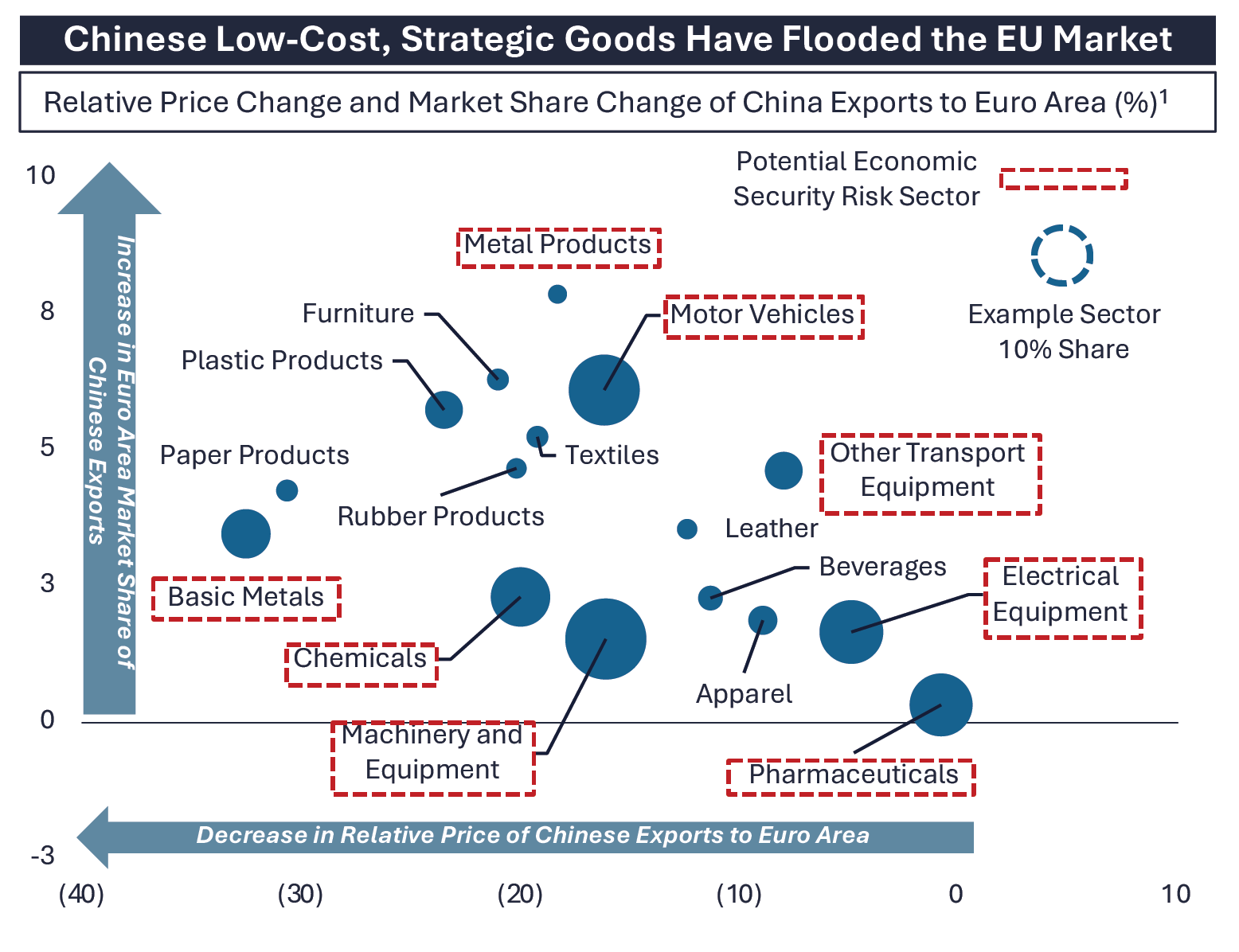
- European Central Bank.
Shifting Political and Diplomatic Tides in Latin America
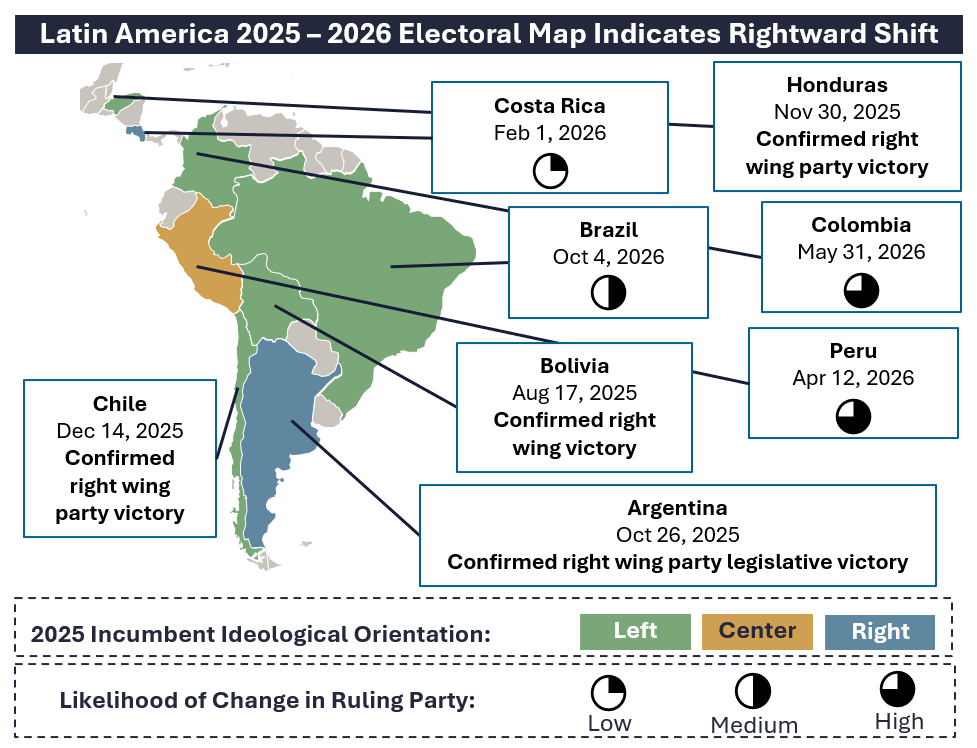
2026 is shaping up to be a year of significant transformation for Latin America. The US is already putting into practice its renewed prioritization of the Western Hemisphere through the capture of Venezuelan President Nicolás Maduro. The extraordinary intervention highlights US intent to exert significant influence over the whole region
Against the backdrop of growing US assertiveness, a crowded electoral calendar will also play a decisive role in the region’s outlook. Disappointing economic results under left‑leaning incumbents is creating momentum for right‑wing candidates after a long period of left‑of‑center dominance. This ideological shift is likely to bring more market‑friendly policies, including lighter regulation, business friendly reforms, and efforts to address deteriorating security conditions.
The Rise of Critical Mineral Alliances
Critical mineral alliances are taking center stage, as governments and companies race to secure traceable, resilient supply chains.
The US and increasingly Europe are beginning to treat critical minerals as a top security risk, driven by China’s recent expansion of export controls on rare earth elements and downstream products, which have already created supply chain shocks. Absent a strong web of these partnerships to institutionalize allied supply chains for minerals and advanced manufacturing, as well as credible demand signals that make non-China processing investable, China will retain leverage at key input choke points.
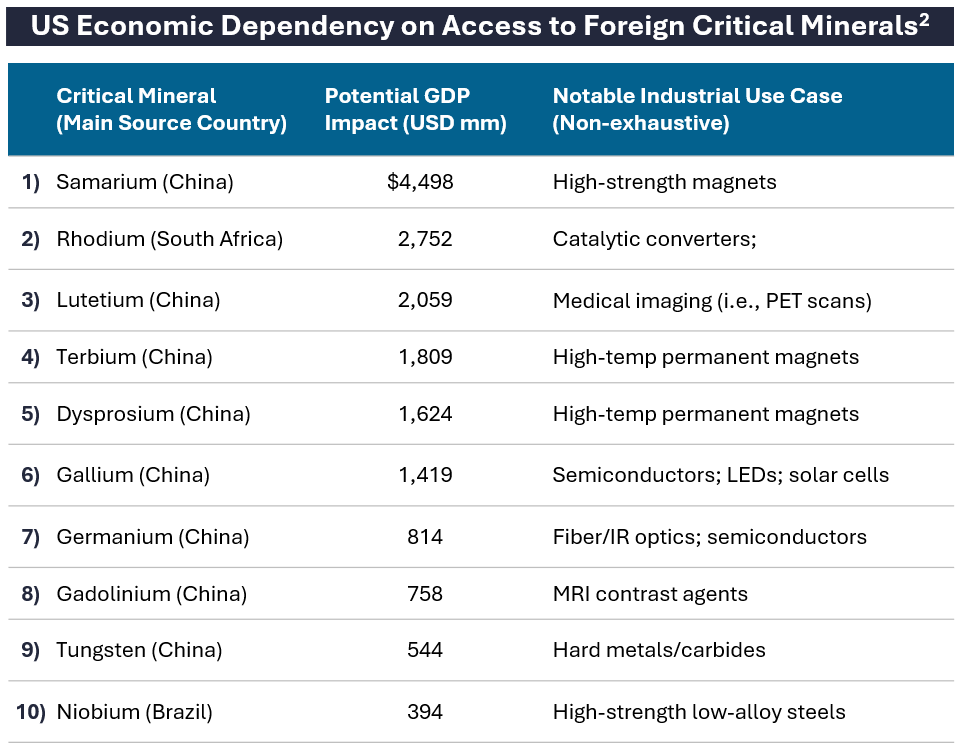
2. Table shows the 10 commodities with the largest expected US GDP loss under a disruption of US net imports according to US Geological Survey.
US-China: The Search for a Deal
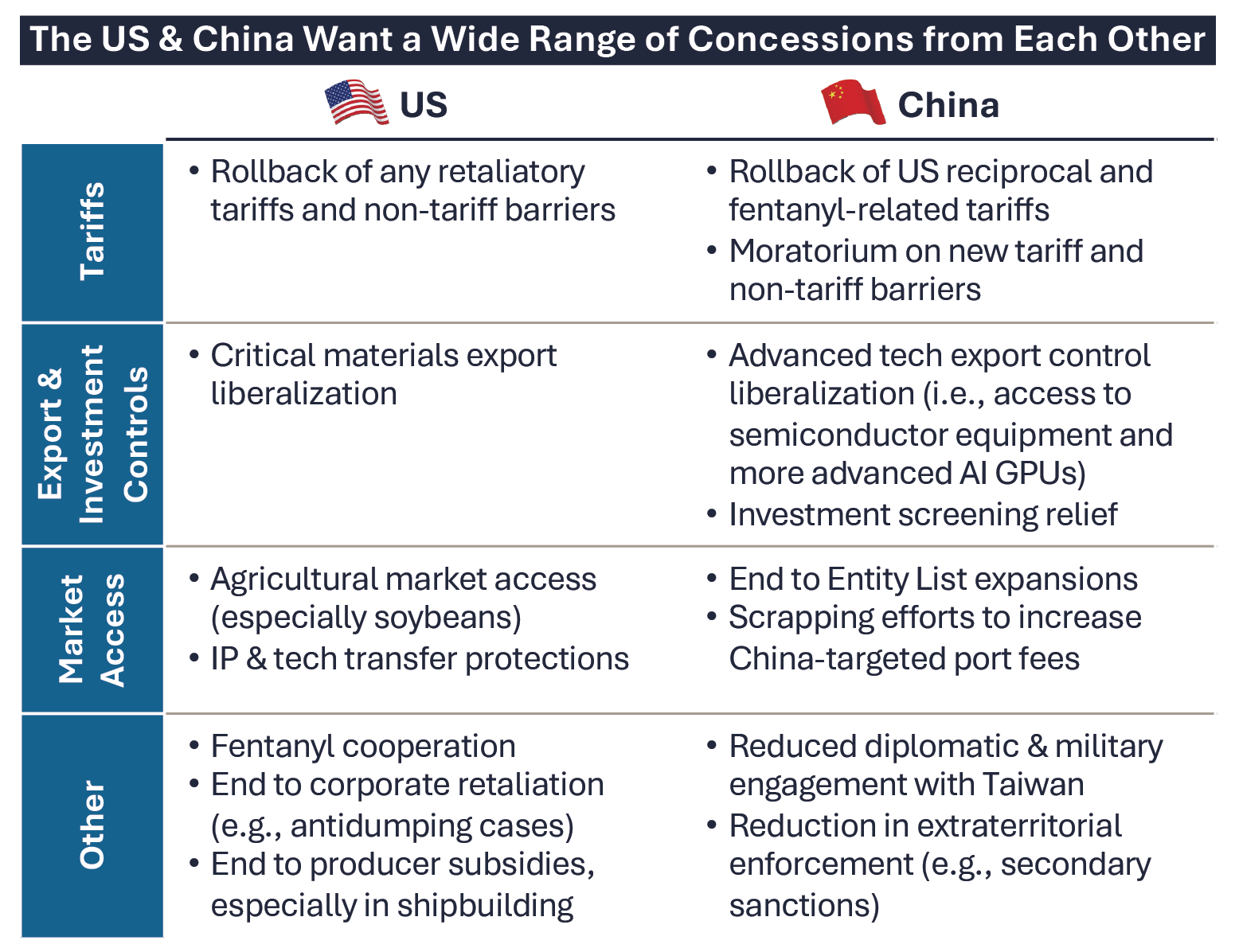
Presidents Trump and Xi are set for as many as four summits over the course of 2026. The consistent drumbeat of diplomatic engagement should, in theory, reinforce a fragile state of stability in the relationship as both sides seek to keep high-level engagement a prominent feature of the bilateral relationship.
However, the current equilibrium will likely be challenged throughout the year. October’s tariff truce between the two countries did not address more fundamental, structural points of friction, including US technology restrictions and support for Taiwan. 2026 will determine whether there is a major break in US technology and trade policy towards China, or if the currently sidelined hawkish consensus will reassert itself.
To learn more, please email geopoliticaladvisory@lazard.com